California Fire-Safe Outdoor Kitchen Design: Essential Standards for 2026
Reading time: 14 minutes
If you’ve spent any time in California over the past few years, you already know the story: wildfire seasons are longer, more intense, and more unpredictable than ever before. In 2025 alone, California recorded over 7,200 wildfires that burned nearly 1.1 million acres — and yet, homeowners across the state continue to invest in outdoor kitchens at a record pace. The question isn’t whether you want that dream outdoor cooking space. The question is whether it will survive — and whether it will help keep your home and neighbors safe.
Here’s the straight talk: building an outdoor kitchen in California without understanding fire-safe design isn’t just a financial risk — it’s a safety risk. But with the right standards, materials, and planning strategies, you can absolutely have that beautiful, functional outdoor kitchen without gambling with your property or your community.
This guide cuts through the noise and gives you the precise, actionable framework you need to design and build a fire-safe outdoor kitchen that meets California’s 2026 regulatory landscape.
Table of Contents
- Why Fire-Safe Design Matters More Than Ever in 2026
- California’s Regulatory Framework: What Governs Outdoor Kitchens
- Fire-Resistant Materials: What to Use and What to Avoid
- Strategic Layout and Clearance Standards
- Appliances, Gas Lines, and Ignition Safety
- Real-World Case Studies: Lessons from the Field
- Fire Risk Reduction: Impact of Key Design Choices
- Material Comparison Table
- Frequently Asked Questions
- Your Fire-Safe Outdoor Kitchen Roadmap
Why Fire-Safe Design Matters More Than Ever in 2026
California’s relationship with wildfire has fundamentally changed. The concept of a traditional “fire season” is now essentially obsolete — fire risk is a year-round reality, especially in the Wildland-Urban Interface (WUI), where roughly 11 million California homes currently exist, according to the California Department of Forestry and Fire Protection (CAL FIRE) 2026 estimates.
Outdoor kitchens represent one of the most complex fire-risk intersections in residential design. You’re combining open-flame appliances, combustible deck materials, surrounding vegetation, and structural elements — all in an open environment where ember cast and wind behavior are unpredictable. The National Fire Protection Association (NFPA) notes that outdoor cooking equipment contributes to approximately 10,600 home fires annually in the United States, with California disproportionately represented due to its climate conditions.
But here’s the empowering flip side: a properly designed fire-safe outdoor kitchen doesn’t just reduce risk — it can actually serve as a defensible buffer zone around your home when designed with fire-smart landscaping integration. Think of it less as “sacrificing beauty for safety” and more as designing smarter from the ground up.
“The outdoor kitchen is no longer just a lifestyle amenity in California — it’s an architectural decision with direct fire-safety implications. We’re now designing these spaces the same way we think about defensible space zones.” — Sarah Kendrick, Licensed California Fire-Safe Landscaping Consultant, 2026
California’s Regulatory Framework: What Governs Outdoor Kitchens
Navigating California’s regulatory landscape around outdoor kitchens can feel like decoding multiple overlapping languages. Here’s the practical breakdown of what actually applies to your project in 2026.
State-Level Standards
The primary regulatory pillars governing fire-safe outdoor kitchen design in California include:
- California Building Code (CBC) 2025 Edition: Adopted statewide in January 2026, this version includes updated provisions for exterior construction materials in high fire hazard severity zones (HFHSZ). Section R327 specifically addresses ignition-resistant construction for outdoor structures.
- CAL FIRE’s Fire Hazard Severity Zone (FHSZ) Maps (Updated 2023, implemented ongoing): These maps determine whether your property sits in a Moderate, High, or Very High fire hazard zone — each tier carrying different construction requirements.
- California Mechanical Code: Governs gas appliance installation, ventilation requirements, and combustion air supply for outdoor cooking appliances.
- NFPA 96: While primarily a commercial standard, California’s AHJs (Authorities Having Jurisdiction) increasingly reference this standard for outdoor kitchen ventilation and hood suppression in residential WUI builds.
Local Jurisdiction Requirements
This is where many homeowners get caught off guard. While state standards set the floor, local fire departments and building departments frequently impose stricter requirements — especially in counties like Los Angeles, San Diego, Santa Barbara, and Sonoma. In 2026, over 340 California municipalities have adopted supplemental outdoor structure fire-safety ordinances beyond state minimums.
Key local factors to verify before you design:
- Whether your parcel is in a Local Responsibility Area (LRA) or State Responsibility Area (SRA)
- Your county’s specific setback requirements from structures, property lines, and vegetation
- Local permit requirements for gas line extensions to outdoor areas
- HOA fire-safety overlay rules, which in many Southern California communities have been significantly tightened since 2024
Pro Tip: Before spending a single dollar on design, call your local building and fire department. A 30-minute conversation can save you from a costly redesign. Ask specifically: “Is my parcel in an HFHSZ, and what supplemental outdoor kitchen standards apply?”
Fire-Resistant Materials: What to Use and What to Avoid
Material selection is arguably the single most impactful fire-safety decision in outdoor kitchen design. The wrong materials don’t just pose a direct ignition risk — they can accelerate fire spread to your home’s structure during a wildfire event.
Approved and Recommended Materials
California’s 2026 CBC and HFHSZ construction standards emphasize ignition-resistant materials throughout. Here’s how to think about each major component:
Countertops: Natural stone (granite, quartzite, concrete) are optimal choices. Porcelain tile rated for exterior use is also excellent. Avoid engineered quartz with polymer resins in direct flame zones — these can off-gas and ignite under extreme heat exposure.
Cabinet/Frame Structure: Steel framing with masonry infill (CMU block, brick, or stone veneer) is the gold standard for WUI outdoor kitchens. Pre-fabricated aluminum-framed outdoor kitchen systems are acceptable when combined with non-combustible cladding materials. Never use wood framing for primary outdoor kitchen structures in High or Very High FHSZ zones.
Flooring and Decking: This is one of the most critical — and most frequently violated — elements. Pressure-treated wood decking adjacent to outdoor kitchens presents serious ember accumulation risk. California’s 2025 CBC now specifically discourages combustible decking materials within 10 feet of outdoor cooking appliances in HFHSZ. Concrete pavers, natural stone, porcelain tile, or Class A fire-rated composite decking are all compliant options.
Overhead Structures (Pergolas, Shade Covers): If you’re planning a covered outdoor kitchen, this element demands careful attention. Non-combustible aluminum, steel, or concrete pergola systems are strongly preferred. If you’re set on a wood aesthetic, use fire-retardant treated lumber (FRTL) that meets ASTM E84 Class A flame spread requirements — and ensure your local AHJ accepts it for your specific fire zone classification.
Countertop Backsplash and Surround: Ceramic or porcelain tile, natural stone, or steel are all excellent choices. Grout selection matters too — use polymer-modified exterior grout rated for high-temperature exposure.
What to Specifically Avoid
- Cedar or redwood siding on kitchen structures — despite their natural beauty, both are highly ignitable
- Plastic or vinyl components near heat sources — including cabinet doors, trim, and decorative elements
- Combustible privacy screens or lattice panels adjacent to grills or burners
- Synthetic wicker or rattan furniture within the immediate kitchen zone
- Untreated wood beams overhead even when aesthetically tempting
Strategic Layout and Clearance Standards
Even perfect materials can fail if the layout creates dangerous proximity conditions. Fire-safe outdoor kitchen layout is about strategic spatial relationships between heat sources, combustibles, vegetation, and structures.
Clearance Requirements
The CBC 2025 Edition and NFPA 54 (National Fuel Gas Code) together establish the following minimum clearances that California homeowners must observe:
- Grill to overhead combustible structure: Minimum 36 inches vertical clearance. For non-combustible overheads (steel pergola, concrete), minimum 18 inches is generally acceptable but always verify locally.
- Grill to side walls/combustible surfaces: Minimum 10 inches lateral clearance on each side per NFPA 54; many California jurisdictions require 12–18 inches.
- Grill to home structure (walls, siding, windows): Minimum 10 feet is the general recommendation; CAL FIRE’s defensible space guidelines support a 10-foot non-combustible buffer around any open-flame cooking appliance.
- Outdoor kitchen structure to property line: Varies by municipality, typically 5–10 feet minimum; check local zoning.
- Vegetation clearance: Within Zone 1 (0–30 feet from structure) per CAL FIRE defensible space guidelines, keep all plant material within 10 feet of the outdoor kitchen to a maximum height of 18 inches and ensure horizontal separation between plant clusters.
Quick Scenario: Imagine you’ve designed a beautiful L-shaped outdoor kitchen nestled against a stucco exterior wall of your home, with a cedar pergola overhead and ornamental grasses planted alongside. At first glance, it looks stunning. But this layout potentially violates three separate clearance standards simultaneously and could be denied a permit — or worse, become a liability during a wildfire event. Layout review against these standards before construction begins is non-negotiable.
Ember Management Zones
One concept that’s gained significant traction in California outdoor kitchen design since 2024 is the ember management zone — a design approach borrowed from WUI construction principles and adapted for outdoor living spaces.
The idea: embers from regional wildfires can travel up to a mile in wind-driven fire conditions. Your outdoor kitchen should be designed so that embers landing in or around it have no combustible material to ignite. This means:
- Non-combustible ground surface extending at least 5 feet in all directions from cooking appliances
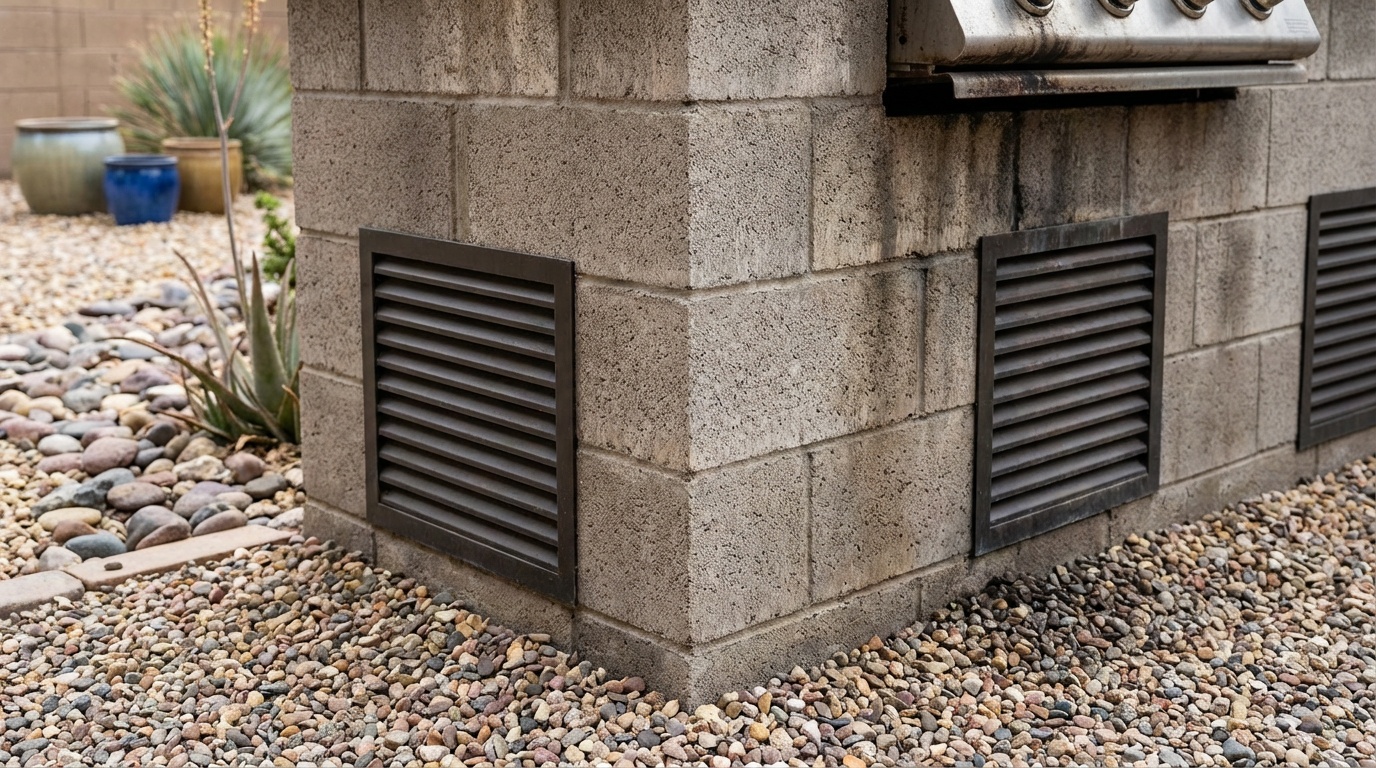
- No gaps or crevices in the kitchen structure where embers can accumulate (common failure points include under-counter gaps and open-bottom cabinet cavities)
- Screened or sealed ventilation openings on any enclosed storage areas
- Wind-break design that reduces ember drift without creating combustible barriers
Appliances, Gas Lines, and Ignition Safety
The mechanical and gas system components of your outdoor kitchen carry their own set of critical fire-safety requirements. These aren’t just code compliance boxes to check — they’re genuinely life-safety systems.
Gas Supply Systems: All outdoor gas appliances in California must be served by gas lines installed per California Mechanical Code and NFPA 54. Key 2026 requirements include:
- A dedicated outdoor shut-off valve that is clearly marked and accessible without tools, located at least 3 feet from any appliance
- Flexible gas connectors to appliances must be rated for outdoor use (stainless steel braid-covered, marked “outdoor rated”)
- Pressure testing of all gas lines before initial use — required by permit inspection in most California jurisdictions
- Automatic gas shut-off systems (seismic and manual) are required in earthquake-prone areas (which is most of California)
Grill and Appliance Selection: Choose appliances with UL or CSA certification for outdoor use. In WUI zones, many fire-safety consultants in 2026 recommend grills with integrated flame tamers and lid-locking mechanisms that reduce ember dispersion during high-wind cooking conditions.
Ventilation Hoods: If your outdoor kitchen is under a covered structure, a properly sized ventilation hood is essential. California’s 2025 CBC requires exhaust hoods for covered outdoor cooking areas to be constructed of non-combustible materials (typically stainless steel or copper) and to vent away from the overhead structure.
Fire Extinguisher Placement: California Fire Code requires a minimum Class K fire extinguisher be accessible within 30 feet of any outdoor cooking appliance used for commercial purposes. For residential WUI outdoor kitchens, while not always strictly required, having a Class K extinguisher mounted within arm’s reach of your cooking station is strongly recommended by CAL FIRE and every fire-safe design professional interviewed for this article.
Real-World Case Studies: Lessons from the Field
Case Study 1: The Sonoma County Rebuild (2025)
After losing their home in 2019, the Marchetti family rebuilt in Sonoma County with fire safety as the primary design driver. Their outdoor kitchen — completed in early 2025 — became a regional model for fire-safe design. Built entirely on a concrete slab with a CMU block frame, quartzite countertops, and covered by a powder-coated steel pergola, the kitchen sits in a fully non-combustible zone. The surrounding landscape uses fire-resistant succulents and decomposed granite ground cover. During the 2025 fire season, when nearby properties experienced ember exposure, the Marchetti outdoor kitchen showed zero ignition vulnerability. Total additional cost over a standard outdoor kitchen build: approximately $8,400 — less than 15% premium for dramatically increased fire resistance.
Case Study 2: The San Diego Misstep (2024)
A homeowner in a Very High FHSZ zone in eastern San Diego County completed an outdoor kitchen in 2024 using a prefabricated stucco-faced wood-framed system with a composite wood pergola overhead. The design passed initial aesthetic review but failed fire department inspection twice before being rebuilt. The homeowner ultimately spent $14,000 in remediation costs — more than the original kitchen build — replacing the wood frame with a steel-and-masonry system. The lesson: understanding your fire zone classification before selecting materials saves significant money and time.
Fire Risk Reduction: Impact of Key Design Choices
The following chart illustrates the estimated fire risk reduction percentage associated with key fire-safe design decisions, based on CAL FIRE and Insurance Institute for Business and Home Safety (IBHS) research data compiled through 2025.
Estimated Fire Risk Reduction by Design Choice
88%
72%
65%
58%
47%
Source: IBHS Wildfire Prepared Home Program data & CAL FIRE defensible space research, 2025
Material Comparison Table: Fire-Safe Outdoor Kitchen Components
| Component | Recommended Option | Fire Rating | HFHSZ Compliance | Relative Cost |
|---|---|---|---|---|
| Structure Frame | Steel + CMU Masonry | Non-Combustible | ✅ All Zones | $$$ |
| Countertop | Granite / Quartzite / Concrete | Non-Combustible | ✅ All Zones | $$–$$$ |
| Decking/Flooring | Concrete Pavers / Porcelain Tile | Non-Combustible | ✅ All Zones | $$ |
| Overhead Cover | Powder-Coated Aluminum / Steel | Non-Combustible | ✅ All Zones | $$$ |
| Cladding / Veneer | Natural Stone / Porcelain Tile | Non-Combustible | ✅ All Zones | $$–$$$ |
Frequently Asked Questions
Do I need a building permit for an outdoor kitchen in California?
In almost all California jurisdictions, yes — especially if your outdoor kitchen involves gas lines, electrical connections, or any permanent structure. Permit requirements also vary based on whether your parcel is in an HFHSZ. In 2026, many counties have streamlined the permit process for fire-compliant outdoor kitchen designs, sometimes offering expedited review for projects that proactively meet fire-safe standards. Always check with your local building department before breaking ground. Unpermitted outdoor kitchens not only create legal liability but can also void your homeowner’s insurance coverage in the event of a fire-related claim.
Can I use a wood-frame outdoor kitchen structure if I apply fire-retardant treatment?
In Moderate FHSZ zones, fire-retardant treated lumber (FRTL) meeting ASTM E84 Class A standards may be acceptable with your local AHJ’s approval. However, in High and Very High FHSZ zones — which cover the majority of California’s WUI areas — the 2025 CBC and most local ordinances now require non-combustible structural systems for permanent outdoor kitchen installations. Fire-retardant treatments also require re-application and maintenance, and their effectiveness degrades over time with California’s intense UV and temperature cycles. For a permanent installation, masonry and steel is a more reliable long-term investment than treated wood, both financially and from a safety standpoint.
What’s the most common fire-safety mistake homeowners make when building an outdoor kitchen in California?
Based on CAL FIRE inspector reports and contractor feedback compiled through 2025, the single most common mistake is failing to address the transition zone between the outdoor kitchen and the surrounding landscape. Homeowners invest in fire-safe kitchen materials and appliances but then plant ornamental grasses, bamboo, or woody shrubs directly adjacent to the structure, completely undermining the fire-resistant design. The second most common mistake is using combustible composite or natural wood decking up to — or directly under — the cooking zone. Both issues are entirely preventable with early-stage planning and a basic understanding of California’s defensible space Zone 1 requirements.
Your Fire-Safe Outdoor Kitchen Roadmap: Building with Confidence
You now have the framework. The question is where you start. Here’s your practical action roadmap for turning these standards into a real, beautiful, and fire-safe outdoor kitchen:
- Determine your fire zone classification first. Before any design work, use the CAL FIRE FHSZ map viewer (updated for 2026) to confirm your parcel’s classification. This single step determines everything that follows — materials, clearances, permit requirements.
- Engage a contractor with HFHSZ experience. Not every outdoor kitchen contractor in California has deep experience with fire-safe design. Ask specifically about their experience building in High or Very High zones, and request references from projects in your fire zone tier.
- Run your concept through a fire-safe design checklist before investing in detailed plans. Use the clearance standards, material guidelines, and ember management concepts in this article as a pre-design filter. Catching issues at the concept stage is dramatically cheaper than redesigning during permitting or construction.
- Integrate landscape planning into the kitchen design process — simultaneously, not sequentially. Your outdoor kitchen’s fire safety is inseparable from the surrounding landscape. Involve a fire-safe landscaping professional alongside your kitchen designer from day one.
- Document everything for your insurance provider. In 2026, California homeowners with documented fire-safe outdoor structures are seeing measurable premium benefits from select insurers. Keep records of all materials specifications, permits, and inspections — this documentation has real financial value.
The broader trend is unmistakable: as California’s climate reality evolves and homeowners increasingly rebuild or remodel with fire safety top of mind, fire-safe outdoor living design is shifting from niche specialty to mainstream expectation. The standards being set by forward-thinking homeowners and designers in 2026 will define what “responsible outdoor living” looks like across the entire western United States by the end of this decade.
Here’s the question worth sitting with: When you imagine your outdoor kitchen ten years from now, do you want it to be a place your family has gathered safely through multiple fire seasons — or do you want to wonder whether you made the right choices when you had the chance? The knowledge is here. The standards are clear. Now it’s your turn to build something that lasts.
Article reviewed by Sofia Romano, Flooring & Wall Tiling Geometry Specialist, on May 4, 2026