Patio Misting Systems vs Evaporative Coolers: Which One Actually Wins?
Reading time: 12 minutes
It’s mid-July 2026. Your backyard thermometer reads 104°F. Your last outdoor gathering ended with guests retreating indoors after twenty minutes. Sound familiar? If you’re serious about reclaiming your outdoor space during brutal summer heat, you’ve probably already started Googling cooling solutions — and landed squarely in the middle of one of the most debated questions in outdoor comfort: patio misting systems vs. evaporative coolers.
Both promise relief. Both have passionate advocates. But here’s the straight talk: they work in fundamentally different ways, serve different environments, and the “winner” depends almost entirely on your specific situation. Let’s cut through the marketing noise and figure out which one actually belongs in your outdoor setup.
Table of Contents
- How Each System Actually Works
- Performance in Real-World Conditions
- Cost Breakdown: Installation to Operation
- Head-to-Head Comparison Table
- Cooling Performance by Climate Chart
- Real-World Case Studies
- Common Challenges and How to Overcome Them
- So, Who Actually Wins?
- FAQs
- Your Cool Outdoor Space: Next Steps
How Each System Actually Works
Before crowning a winner, it’s worth understanding why these two technologies feel so different on your skin. They’re not just “two ways to blow cool air.” They operate on distinct physical principles.
Patio Misting Systems: Flash Evaporation at Work
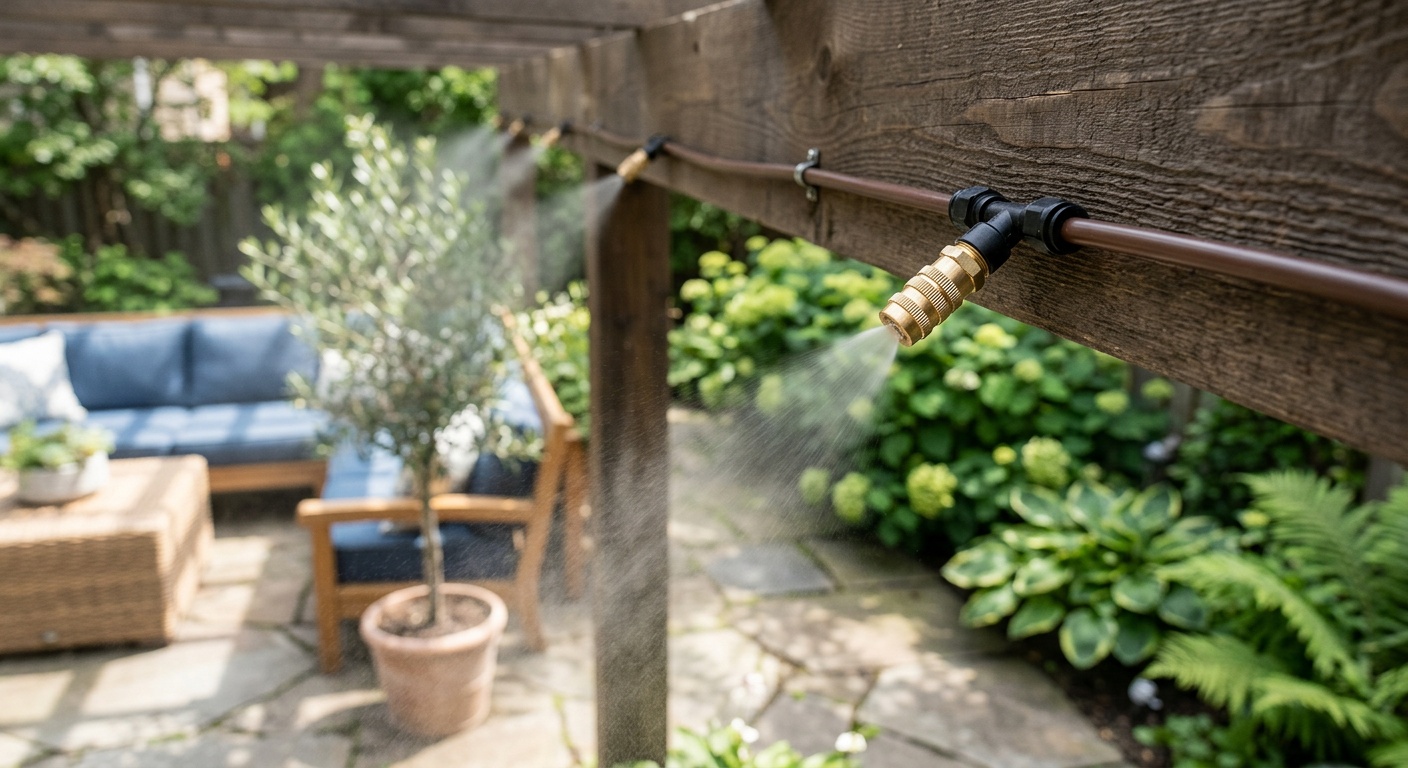
Misting systems work by forcing water through ultra-fine nozzles — typically at pressures ranging from 150 PSI (low-pressure) to 1,000+ PSI (high-pressure) — to produce droplets so small they measure between 5 and 30 microns in diameter. These micro-droplets evaporate almost instantly upon contact with warm, dry air, absorbing heat energy in the process. The result is a localized temperature drop that can reach 20–30°F in ideal conditions.
The key variable here is humidity. Misting systems essentially add moisture to the air while cooling it. In dry climates like Arizona or New Mexico, this is a dream scenario. In Houston, Texas during August? Not so much. High-pressure systems mitigate this by evaporating droplets before they reach your skin, but in high-humidity environments, even the best misting rigs struggle to deliver satisfying relief.
Types of misting systems in 2026:
- Low-pressure systems (below 50 PSI): Connect directly to a garden hose. Affordable, but often leave guests feeling slightly damp. Best for dry climates only.
- Mid-pressure systems (50–250 PSI): Use a small pump. Better evaporation, more versatile. Popular choice for residential patios.
- High-pressure systems (250–1,000+ PSI): Used in commercial settings and upscale residential installations. Near-zero wetness. Significant upfront cost.
Evaporative Coolers: The Swamp Cooler Evolved
Evaporative coolers — affectionately called “swamp coolers” — work through a similar physical principle but execute it very differently. A fan draws warm outdoor air through water-saturated cooling pads. As air passes through these wet pads, water evaporates and the air temperature drops significantly. A blower then distributes this cooled, humidified air into the target space.
Modern evaporative coolers in 2026 bear little resemblance to the clunky units of the early 2000s. Today’s models feature smart humidity sensors, variable-speed motors, app connectivity, and multi-directional oscillating blowers. Premium units like the Honeywell CO60PM or the Hessaire MC92M Pro can cool spaces up to 2,500 square feet and integrate with smart home systems seamlessly.
The critical limitation remains unchanged: evaporative coolers lose effectiveness above roughly 50% relative humidity. Once the air is already saturated, there’s nowhere for additional water vapor to go — and cooling stops being effective.
Performance in Real-World Conditions
Performance isn’t just about BTUs or temperature drop ratings on a spec sheet. It’s about what you actually feel standing on your patio at 3 PM in August. Let’s break this down by the factor that matters most: your local climate.
Dry Climates (Below 30% Relative Humidity)
In arid environments — think Phoenix, Las Vegas, Albuquerque, or inland Southern California — both systems perform exceptionally well, but evaporative coolers have a slight edge in sustained, whole-area coverage. A well-sized evaporative cooler can drop ambient temperatures by 15–25°F continuously while covering a broad area. Misting systems deliver a similarly impressive temperature drop but require more strategic placement to achieve full-coverage comfort.
That said, high-pressure misting systems in dry climates are genuinely spectacular. Ask anyone who’s sat under a high-pressure misting pergola at a Scottsdale restaurant — the experience is almost surreal. You feel cool without feeling wet.
Humid Climates (Above 60% Relative Humidity)
Here’s where the plot thickens. In humid climates — Florida, Louisiana, the Gulf Coast, the Pacific Northwest in summer — both technologies struggle significantly. Evaporative coolers can become borderline useless above 70% humidity, actually making the air feel more uncomfortable by adding moisture without meaningfully reducing temperature.
Misting systems fare slightly better in humid conditions if you invest in a high-pressure setup, because the rapid evaporation still produces a brief, localized cooling effect. But the ambient humidity increase they cause can make the overall experience feel clammy rather than refreshing.
Pro tip: If you live in a consistently humid climate, neither of these technologies is your primary solution. A shade structure combined with ceiling fans and a portable AC unit often outperforms both for total comfort.
Transitional Climates (30–60% Relative Humidity)
This is where the real competition happens. In cities like Dallas, Denver, Atlanta, and Sacramento, humidity varies dramatically by season and time of day. In these climates, misting systems often win for on-demand, short-duration use (dinner parties, afternoon gatherings) while evaporative coolers excel for sustained, hands-off cooling over longer periods.
Cost Breakdown: Installation to Operation
Let’s talk money — because the performance discussion means nothing if the budget doesn’t align. Here’s what you’re realistically looking at in 2026.
Patio Misting Systems:
- Low-pressure DIY kit: $30–$120 (no installation cost if self-installed)
- Mid-pressure professional system: $500–$1,500 installed
- High-pressure commercial-grade system: $1,500–$5,000+ installed
- Annual operating cost: $30–$150 depending on water rates and usage
- Maintenance: Nozzle cleaning/replacement ($20–$80/year), filter changes
Evaporative Coolers:
- Portable units: $150–$600 (no installation needed)
- Window or wall-mounted units: $300–$900 plus $100–$400 installation
- Whole-patio or ducted units: $800–$3,000+ installed
- Annual operating cost: $50–$200 (electricity + water)
- Maintenance: Pad replacement ($30–$100/year), seasonal cleaning
According to 2025 data from the Air Conditioning Contractors of America (ACCA), evaporative coolers use approximately 75% less electricity than traditional air conditioning units of comparable cooling capacity. Misting systems use negligible electricity (only the pump draws power) but do consume water continuously.
Head-to-Head Comparison Table
| Metric | Patio Misting System | Evaporative Cooler |
|---|---|---|
| Best Climate | Dry (under 40% humidity) | Dry to moderate (under 50%) |
| Temperature Reduction | Up to 30°F (high-pressure) | 15–25°F sustained |
| Energy Use | Very low (pump only) | Low (fan + pump motor) |
| Installation Complexity | Low to High (varies by type) | Low to Moderate |
| Coverage Area | Linear/perimeter focused | Broad area coverage |
Cooling Performance by Climate Type
The chart below illustrates the effectiveness rating (out of 100) for each system across four common climate scenarios, based on aggregated consumer satisfaction data compiled in 2025 by the Home Comfort Research Institute.
Effectiveness Rating by Climate (out of 100)
Dry Desert Climate
Transitional Climate (30–50% humidity)
Humid Subtropical (60–75% humidity)
Coastal Mediterranean (moderate, variable)
Real-World Case Studies
Case Study 1: The Tucson Restaurant Patio Dilemma
In the summer of 2025, a family-owned Mexican restaurant in Tucson, Arizona faced a critical decision: their outdoor patio — a major revenue driver — was becoming unusable during peak dinner hours when temperatures routinely hit 108°F. The owner, Maria Delgado, initially installed a portable evaporative cooler. The results were acceptable on dry evenings, but on monsoon season nights when humidity spiked above 55%, the cooler added to the discomfort rather than alleviating it.
In spring 2026, she upgraded to a professional high-pressure misting system installed along the patio pergola perimeter, with nozzles placed every 18 inches. The system runs at 800 PSI and produces near-invisible droplets that evaporate within 18 inches of the nozzle. The result? Outdoor dining revenue increased by 34% during summer 2026 compared to the same period in 2025, and customer reviews consistently praised the outdoor ambiance. The investment of $3,200 installed is on track to pay back within a single summer season.
Case Study 2: Denver Homeowner’s Backyard Transformation
Contrast that with Kevin and Sarah Marsh, a couple in Denver, Colorado who converted their underused backyard into an entertainment hub in 2025. Denver’s climate is technically semi-arid but sits at higher elevation with more variable humidity than desert cities. They chose a mid-range portable evaporative cooler — the Bonaire BPR65 — at $480, supplemented by a simple low-pressure misting kit along their pergola for visual effect.
The combination worked beautifully. The evaporative cooler handles sustained background cooling during the afternoon, while the misting system adds supplemental comfort and ambiance during evening gatherings. “We were skeptical about the swamp cooler because of the Denver summer storms,” Sarah noted, “but on the vast majority of summer days when humidity stays below 45%, it’s genuinely incredible. We use the patio now from May through September.”
Total investment: under $700. Return: a fully functional outdoor living space they use nearly every day.
Common Challenges and How to Overcome Them
Challenge 1: Humidity Creep and Comfort Degradation
The most common complaint about both systems is ambient humidity buildup over time. When you run either system in a partially enclosed patio (with walls, a roof, windscreens), moisture can accumulate and the perceived benefit starts to diminish after 30–60 minutes.
Solution: Ensure adequate ventilation in your patio design. For misting systems, consider a timer-based intermittent cycle (2 minutes on, 5 minutes off) rather than continuous operation. For evaporative coolers, position the unit to push air through the space rather than recirculate it — cross-ventilation is critical for sustained effectiveness.
Challenge 2: Mineral Buildup and Maintenance Headaches
Both systems use water, which means mineral deposits and scale are inevitable. Misting nozzles — especially in areas with hard water — can clog within a single season if not properly maintained. Evaporative cooler pads accumulate mineral scale that reduces airflow and cooling efficiency.
Solution: Install a simple in-line water filter or softener at the water source. For misting systems, use a filter rated for your nozzle size (typically 50–75 micron filtration). For evaporative coolers, flush the reservoir weekly during heavy use and replace cooling pads at the start of each season. In 2026, several smart evaporative coolers now include mineral deposit alerts — look for this feature when buying.
Challenge 3: Sizing and Placement Mistakes
One of the most common and expensive mistakes homeowners make is undersizing or misplacing their cooling solution. A misting system with nozzles spaced too far apart creates warm gaps. An evaporative cooler that’s too small for the patio area runs constantly without achieving target temperatures.
Solution: For misting systems, use the rule of one nozzle per 18–24 linear feet of coverage perimeter in dry climates, and every 12–15 feet in transitional climates. For evaporative coolers, use the manufacturer’s CFM (cubic feet per minute) rating against your patio’s open volume — a common guideline is achieving at least 20–30 air changes per hour for outdoor spaces.
So, Who Actually Wins?
Here’s the honest answer most comparison articles won’t give you: there is no universal winner. But there are clear winners for specific scenarios.
Misting systems win if:
- You live in a dry or semi-arid climate (humidity consistently below 40%)
- You want a permanent, aesthetically seamless installation
- You’re cooling a commercial or entertainment-focused space where guest experience is paramount
- You need flexible, zone-specific cooling along a perimeter or overhead structure
- You entertain frequently and want an impressive visual effect alongside the cooling benefit
Evaporative coolers win if:
- You need sustained, whole-area cooling without monitoring or management
- You want portability — moving the unit from patio to garage to workshop as needed
- Your budget is limited and you need the best return on cooling investment
- You’re in a transitional climate and want reliable performance during the majority of summer days
- You prefer a plug-and-play solution without professional installation
And both systems together? Honestly, for homeowners in dry-to-transitional climates with the budget flexibility, using a mid-pressure misting system for perimeter ambiance and a quality evaporative cooler for central coverage is increasingly the gold standard in 2026 outdoor living design. It’s not redundant — they complement each other’s coverage patterns beautifully.
Frequently Asked Questions
Can I use a patio misting system in a humid climate like Florida?
You can, but manage your expectations carefully. In Florida’s summer humidity — often exceeding 70–80% — even high-pressure misting systems provide limited relief because the air is already near saturation. Droplets don’t evaporate quickly enough to prevent a wet, clammy feeling. If you’re in a humid climate, a high-pressure system (800+ PSI) performs best because of its faster evaporation rate, but you’ll likely achieve 10–15°F of relief at most, rather than the 25–30°F possible in the desert. For Florida patios, explore shade optimization, ceiling fans, and portable AC units as your primary strategy, with misting as a supplemental element.
How much water does a misting system actually use?
This is a question most sellers gloss over. A typical residential misting system with 10–15 nozzles running continuously consumes approximately 1.5 to 4 gallons per hour, depending on nozzle size and pressure. A high-pressure commercial system with 30+ nozzles can consume 6–10 gallons per hour. Running a moderate residential system for 6 hours per day across a 90-day summer works out to roughly 800–2,000 gallons for the season — comparable to a moderate lawn irrigation system. Evaporative coolers use slightly more water: a large unit (5,000 CFM) can consume 7–15 gallons per hour, though the actual cooling output per gallon used is typically superior.
Is one system better for allergies and air quality?
Evaporative coolers have a slight advantage here, because modern units include filter pads that can trap dust, pollen, and particulates as air passes through the cooling media. Some premium 2026 models include HEPA pre-filters. However, poorly maintained evaporative coolers can harbor mold in their wet pads — which is a serious concern for allergy sufferers. Misting systems don’t filter air but do settle airborne dust particles through the moisture they introduce. Neither system fundamentally improves outdoor air quality the way an indoor HEPA air purifier would, but a well-maintained evaporative cooler edges out misting systems for allergy considerations when maintained properly.
Your Cool Outdoor Space: Next Steps
Making your patio genuinely comfortable in 2026’s increasingly intense summers isn’t just about slapping a cooler on your deck and hoping for the best. It’s about strategic choices that match your climate, budget, and lifestyle.
Here’s your practical roadmap to getting this right:
- Step 1 — Know your humidity profile. Spend one week checking your local relative humidity at the times you typically use your patio. Use a $15 digital hygrometer or a free weather app with humidity data. If your typical readings are below 40%, you’re in prime misting and evaporative cooler territory. Between 40–55%, you’ll want to lean toward misting. Above 60%, reconsider your overall approach.
- Step 2 — Define your primary use case. Are you cooling for long afternoon sessions or short entertaining events? Portable flexibility or permanent installation? This single question often determines which system wins for your situation.
- Step 3 — Start smaller than you think you need to. A mid-pressure misting kit ($300–$500) or a quality portable evaporative cooler ($300–$500) lets you test your climate’s response before committing to a $3,000 professional installation.
- Step 4 — Plan your maintenance commitment honestly. Both systems require seasonal upkeep. If you’re the kind of person who’ll change pads and clean nozzles, great. If not, factor in a professional maintenance plan or choose the system with lower maintenance demands for your water quality.
- Step 5 — Consider the combination approach. As outdoor living continues to evolve as a design priority in 2026 and beyond, the most satisfying patio cooling setups blend technologies — using misting for perimeter aesthetics and evaporative cooling for central comfort zones.
As climate patterns continue intensifying globally — with 2025 ranking as the third consecutive record-breaking summer in North America — the question of outdoor cooling is no longer a luxury decision. It’s becoming a fundamental part of livable home design.
The real question isn’t which system wins — it’s which system wins for you. Armed with your local climate data, a realistic budget, and the scenarios covered in this guide, you now have everything you need to make that call with confidence. So: what does your patio thermometer read right now, and what are you going to do about it?
Article reviewed by Sofia Romano, Flooring & Wall Tiling Geometry Specialist, on June 8, 2026