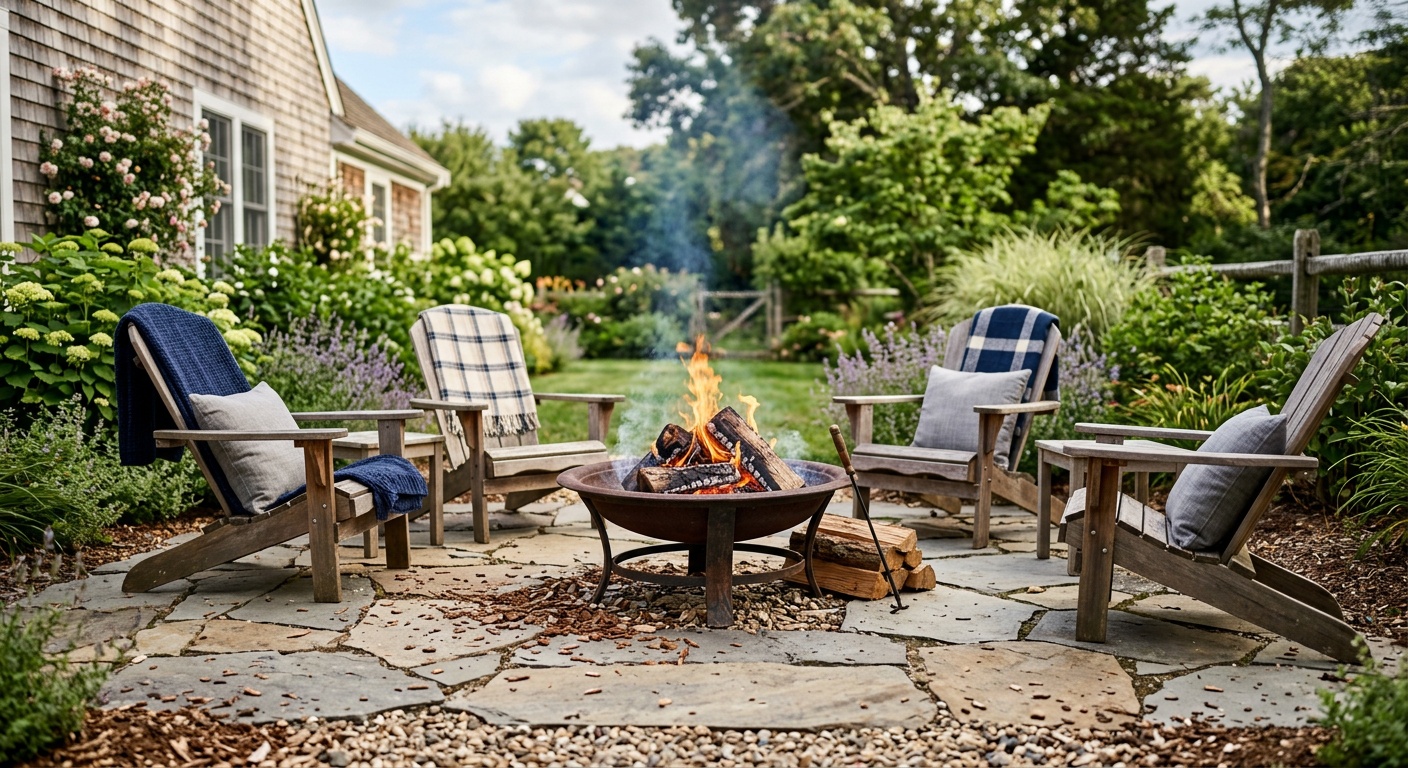
Fire Pit Placement Tips for Small Backyard Outdoor Living
Reading time: 12 minutes
You’ve been dreaming about it for months — a cozy fire pit in your backyard where friends gather, marshmallows roast, and evenings stretch long past sunset. But then reality hits: your backyard is, well, compact. Maybe it’s a postage-stamp patio in a suburban neighborhood, a narrow urban garden, or a modest courtyard squeezed between fences. Does that mean the fire pit dream is off the table?
Absolutely not. In 2026, small-space outdoor living has become one of the hottest design movements in home improvement — and fire pit integration is right at the center of it. According to a 2025 survey by the American Institute of Architects, 68% of homeowners reported investing in outdoor living upgrades despite having yards under 500 square feet. Fire pits ranked as the second most popular addition, right behind raised garden beds.
The challenge isn’t whether you can add a fire pit to a small backyard — it’s about placing it correctly so that it’s safe, functional, and genuinely beautiful. This guide gives you the precise, practical framework to do exactly that.
Table of Contents
- Why Placement Is Everything
- Safety Clearances: The Non-Negotiables
- Choosing the Right Fire Pit Type for Small Spaces
- Local Zoning Rules and HOA Considerations in 2026
- Smart Design Strategies for Compact Yards
- Fire Pit Placement: Performance at a Glance
- Real-World Examples: Small Yards Done Right
- Common Placement Challenges and How to Solve Them
- Frequently Asked Questions
- Your Small Backyard Fire Pit Action Plan
Why Placement Is Everything
Before you order that fire bowl or start digging a pit, understand this fundamental truth: in a small backyard, every square foot carries weight. A fire pit placed even two feet in the wrong direction can turn a lovely outdoor space into a smoke-filled, cramped, or even dangerous environment.
Placement dictates three core outcomes:
- Safety — proximity to structures, vegetation, and neighboring properties
- Functionality — whether the space actually accommodates comfortable seating
- Aesthetics — how the fire pit integrates with the overall visual flow of the yard
Think of fire pit placement like chess, not checkers. Every move affects multiple elements simultaneously. Position the pit too close to the house, and you risk siding damage and potential fire hazard. Too close to the fence, and you violate local codes and upset neighbors. Dead center in a small yard, and you’ve eliminated all usable lawn space. The sweet spot requires strategic thinking — and that’s exactly what this guide delivers.
In 2026, outdoor living design has evolved significantly. Landscape architects now approach small-space fire features using a zoned integration model — treating the fire pit not as an afterthought, but as the anchor point around which all other elements radiate. This shift in philosophy makes a measurable difference in how enjoyable and safe small backyard fire spaces truly become.
Safety Clearances: The Non-Negotiables
Let’s cut straight to the most critical element — because no design goal is worth compromising your family’s safety. Fire pit safety clearances are not suggestions; they are baseline requirements informed by fire safety research and building codes.
Minimum Distance Guidelines
The National Fire Protection Association (NFPA) and most municipal fire codes in the United States recommend the following minimum clearances for residential fire pits:
- 10 feet from any structure (house, garage, shed, pergola)
- 10 feet from overhead branches or utility lines
- 7–10 feet from wooden fences or privacy screens
- 3 feet minimum clear radius around the pit itself (for seating safety)
- 25 feet from flammable materials in windy or high-risk fire zones
Here’s the practical reality for small backyards: if your yard is 20 × 25 feet (a very common urban lot size), maintaining 10-foot clearances from all sides is nearly impossible with a traditional in-ground pit. This is precisely why fire pit type selection becomes your most powerful tool in small-space planning.
Wind Patterns and Smoke Direction
One often-overlooked safety and comfort factor is prevailing wind direction. Before finalizing your placement, spend a week observing where wind typically moves through your yard during evening hours — the time when you’ll most likely be using the fire pit.
Smoke consistently blowing toward seating areas or into neighbors’ yards is both uncomfortable and potentially a code violation in some municipalities. A simple wind sock or ribbon test over several days costs nothing and can save you significant frustration later. Ideally, position your fire pit so prevailing winds carry smoke away from your home and seating area.
Pro Tip: Natural gas and propane fire pits produce dramatically less smoke than wood-burning models — a genuine game-changer for tight urban spaces where smoke management is critical.
Choosing the Right Fire Pit Type for Small Spaces
Not all fire pits are created equal, and in a compact backyard, your choice of fire pit style fundamentally impacts how much space you can reclaim and how safely you can operate it.
The Four Main Options for Small Yards
1. Tabletop Propane Fire Pit
The ultimate small-space solution. Tabletop models sit on existing furniture — a dining table or coffee table — and require no dedicated floor space beyond the table itself. They produce controlled, adjustable flames and virtually no smoke. Ideal for patios under 150 square feet. Average BTU output: 10,000–20,000. Cost in 2026: $80–$350.
2. Portable Gas Fire Bowl (Freestanding)
These sit on legs or a pedestal and can be repositioned as needed. They require a 3–5 foot clear radius and connect to a small propane tank. Many 2026 models include wind guards and auto-ignition. Cost: $200–$800. Best for yards 300–500 square feet.
3. Built-In Sunken Fire Pit
Permanently installed flush with or slightly below grade, sunken pits have a lower visual profile and can feel less imposing in a small yard. However, they require more clearance, professional installation, and a dedicated footprint. Best suited for yards 400+ square feet with smart layout planning. Cost: $1,500–$5,000+.
4. Wall-Integrated Fire Feature
A growing trend in 2026 — linear fire features built into retaining walls or freestanding walls at the perimeter of the yard. This places the flame at the edge rather than in the center, preserving usable floor space entirely. Requires gas line installation. Cost: $2,000–$8,000.
Local Zoning Rules and HOA Considerations in 2026
Here’s where many homeowners stumble: they invest in a beautiful fire pit setup, only to receive a notice from their municipality or HOA requiring removal or relocation. In 2026, zoning regulations around outdoor fire features have become more standardized — but they vary significantly by region.
Key questions to answer before purchasing:
- Does your municipality require a permit for fire pits? As of 2026, approximately 42% of U.S. cities with populations over 50,000 require some form of permit or registration for permanent outdoor fire features.
- Are open-flame fires allowed in your zone? Urban zones, particularly in fire-prone regions like California, Colorado, and the Pacific Northwest, have enacted stricter open-flame ordinances following the 2024–2025 wildfire seasons.
- Does your HOA have specific rules? Many HOAs restrict fire pit placement, require approval of materials and design, or prohibit wood-burning models entirely while permitting gas alternatives.
- What are setback requirements from property lines? Setback rules — the minimum distance between a fire feature and your property boundary — typically range from 10 to 25 feet depending on jurisdiction.
Action step: Contact your local building department and your HOA (if applicable) before finalizing any purchase or installation. Most departments offer free preliminary consultations, and many now provide digital permit applications through municipal portals.
Smart Design Strategies for Compact Yards
Now we get to the creative and strategic heart of this guide. Knowing the rules is essential — but knowing how to work brilliantly within them is where small-space outdoor living becomes an art form.
The Corner Placement Strategy
One of the most effective techniques for small backyards is corner placement. Rather than centering the fire pit in your yard (which sacrifices all usable space around it), position it in a back corner where two fence lines meet. This accomplishes several things simultaneously:
- Concentrates seating into one defined zone, leaving the rest of the yard open
- Creates a natural sense of enclosure and intimacy — exactly the mood a fire pit space should evoke
- Positions the flame farthest from the house, often satisfying safety clearances more easily
- Allows diagonal sight lines from the house to the fire, making the space feel larger visually
Important caveat: verify that corner placement still meets minimum setback requirements from fence lines on both sides. In most cases, a gas or propane model can satisfy these requirements more easily than a wood-burning pit.
Elevated Decks and Multi-Level Patios
If your small backyard includes an elevated deck or multi-level patio, consider placing the fire feature on a lower ground level rather than on the deck itself. This naturally separates the fire zone from the structure, addresses clearance requirements more elegantly, and creates a compelling visual hierarchy — guests descend to the fire level, which psychologically feels like entering a special space.
Note: Never place a wood-burning fire pit on a wooden deck regardless of size. For deck use, only CSA-certified gas or propane models designed specifically for deck installation should be used.
Hardscaping and Surface Considerations
The surface beneath and around your fire pit matters enormously. For small yards, the right hardscaping choice can visually anchor the fire pit zone while protecting your lawn and creating a defined gathering area. Best surface options include:
- Concrete pavers — durable, heat-resistant, low maintenance
- Gravel or decomposed granite — excellent drainage, non-combustible, budget-friendly
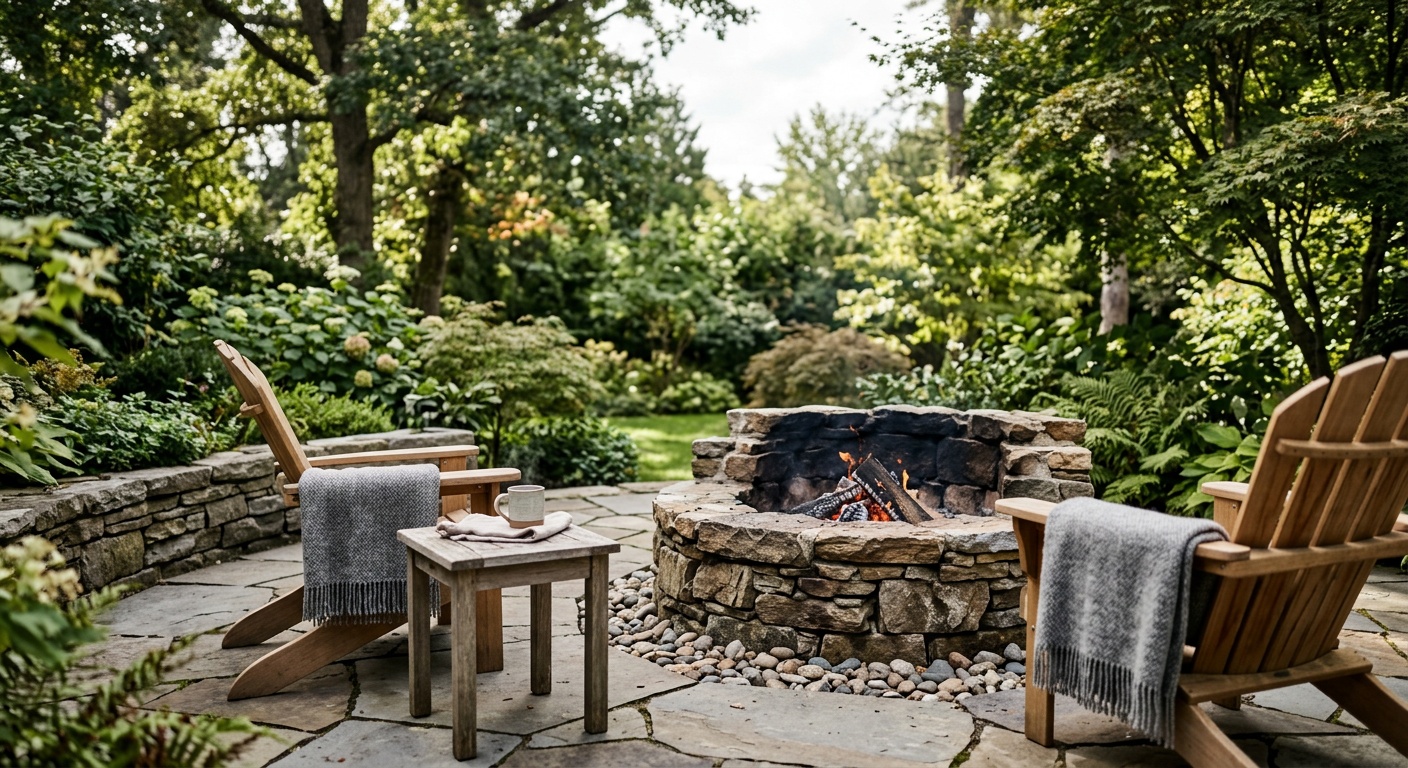
- Flagstone — beautiful, natural aesthetic; pairs well with naturalistic yard designs
- Porcelain tile (outdoor-rated) — sleek and modern; increasingly popular in 2026 urban yards
Avoid: wooden decking, composite materials, or any combustible surface as the immediate base beneath a fire pit.
Fire Pit Placement: Performance at a Glance
Comparative Table: Fire Pit Types for Small Backyards
| Fire Pit Type | Min. Clearance Needed | Smoke Level | Avg. Cost (2026) | Best Yard Size |
|---|---|---|---|---|
| Tabletop Propane | 1–2 ft radius | None | $80–$350 | Under 200 sq ft |
| Portable Gas Bowl | 3–5 ft radius | Minimal | $200–$800 | 200–400 sq ft |
| Wood-Burning Bowl | 10 ft radius | High | $150–$600 | 400+ sq ft |
| Sunken In-Ground Pit | 10–15 ft radius | Moderate–High | $1,500–$5,000 | 500+ sq ft |
| Wall-Integrated Linear | 3–5 ft front clearance | None | $2,000–$8,000 | Any size |
Satisfaction Ratings by Placement Strategy (2025 Homeowner Survey)
Overall Satisfaction Ratings by Fire Pit Placement Approach
Based on 1,200 small-yard homeowners surveyed in 2025 (scale: 0–100%)
Real-World Examples: Small Yards Done Right
Case Study 1: The 18 × 22 Urban Patio, Portland, Oregon
Maria and Dan had a 396-square-foot backyard in Portland’s Southeast district — a classic urban constraint. They wanted a fire feature but faced a wood-burning ban in their county (enacted in 2025 following expanded air quality regulations) and an HOA requiring written approval for any permanent installation.
Their solution: a portable propane fire bowl positioned in the northwest corner of their yard, 11 feet from their back door and 8 feet from each fence line. They paired it with a curved arrangement of three weather-resistant loveseat chairs and a semicircular gravel pad (6-foot radius) that visually defined the fire zone without consuming the whole yard.
The result? Their remaining yard space — roughly 200 square feet — remained open for their dog to run and for a small raised garden bed. Total investment: $640. Satisfaction level: “We use it three or four evenings a week from March through November,” Maria reported in a 2026 homeowner forum thread. “It completely transformed how we live in our backyard.”
Case Study 2: The 280-Square-Foot Courtyard, Austin, Texas
James had a narrow urban courtyard — 14 feet wide, 20 feet deep — between his townhome and a shared fence. He wanted the atmosphere of a fire feature without losing his only outdoor seating space to clearance requirements. His landscape designer recommended a wall-integrated linear gas fireplace built into the back wall, keeping the entire courtyard floor completely open.
The linear fire feature — 36 inches wide, mounted at seated eye level — runs on natural gas and produces no smoke. The flame becomes a visual backdrop to two club chairs and a small bistro table positioned just 4 feet in front. James noted that this placement also dramatically reduced ambient noise from a nearby street, with the wall providing acoustic buffering.
Cost was higher at $3,800 installed, but James describes it as “the single best investment I’ve made in my property.” His home’s appraised value increased by an estimated $6,200 following the renovation — a pattern consistent with 2026 real estate data showing outdoor living upgrades returning 70–85% on investment in urban markets.
Common Placement Challenges and How to Solve Them
Challenge 1: The Overhanging Tree Problem
You’ve found the perfect spot in your yard, but there’s a mature oak or elm casting beautiful shade — and its canopy extends directly overhead. Any open-flame fire feature requires a minimum of 10 feet of vertical clearance from overhead branches. Trimming a mature tree significantly isn’t always advisable (and may require permits itself).
Solution: Shift to a tabletop or enclosed gas fire feature with a glass wind guard that contains embers. These models produce no floating sparks and generate far less radiant heat upward. Alternatively, map out the canopy’s edge and position your fire feature just outside the drip line — typically far enough from the trunk to satisfy clearance requirements while preserving the shade canopy over your seating area rather than over the flame itself.
Challenge 2: Slope and Uneven Ground
Many small yards, especially in older neighborhoods, have significant grade changes. A fire pit on uneven ground poses both stability risks and clearance complications, as the effective “height” of the flame changes relative to surrounding structures.
Solution: Create a level hardscape pad before installation. Even a simple poured concrete pad or compacted gravel base (minimum 6 inches deep) can level an area of 8 × 8 feet at modest cost. For steeper slopes, a professional landscape contractor can install a small retaining wall and level terrace — which also creates the multi-level design dynamic mentioned earlier and often enhances the space aesthetically.
Challenge 3: Neighbor Relations and Smoke Drift
In densely packed neighborhoods, your fire pit’s smoke can drift into adjacent yards, onto neighbors’ laundry, or through open windows — causing friction even where no code violation exists. This social dimension of fire pit placement is genuinely important and often overlooked in purely technical guides.
Solution approach: First, choose a low-smoke or no-smoke fire pit type (propane, natural gas, or smokeless wood-burning models, which have proliferated dramatically in 2025–2026). Second, orient the fire pit so that prevailing winds push smoke toward your own property’s interior rather than toward fence lines. Third, simply talk to your neighbors before installation. A brief conversation — “We’re planning a small propane fire pit in the back corner, here’s what it looks like, let us know if you have any concerns” — transforms a potential conflict into a moment of community goodwill.
Frequently Asked Questions
How close can I put a fire pit to my house in a small backyard?
Most fire safety codes and manufacturer guidelines require a minimum of 10 feet between any fire pit and your home’s structure, including walls, eaves, and overhangs. In a very small yard where 10 feet isn’t achievable, opt for a fully enclosed propane or natural gas tabletop model, which some municipalities permit at closer ranges due to their controlled, contained flame. Always verify with your local fire marshal or building department before installation, as local codes supersede general guidelines.
Can I use a wood-burning fire pit in a small urban backyard?
Possibly, but increasingly unlikely to be the best choice. As of 2026, many urban municipalities — particularly in California, the Pacific Northwest, and parts of the Northeast — have enacted restrictions on recreational wood burning, especially on days with poor air quality (designated “Spare the Air” days). Beyond legal considerations, wood-burning pits in small yards create significant smoke management challenges. Gas and propane alternatives offer equivalent or superior ambiance with dramatically better performance in tight spaces. If you’re committed to wood fire, investigate smokeless fire pit models using secondary combustion technology — they reduce particulate output by up to 92% compared to traditional open pits.
Do I need a permit to install a fire pit in my backyard?
It depends on your location and the type of fire pit. As a general rule in 2026: permanent, in-ground, or gas-line-connected fire features almost always require a permit. Portable, freestanding propane or wood-burning fire bowls generally do not, though placement rules still apply. Check with your city or county building department — many now offer fast online permit checks — and review your HOA’s CC&Rs if applicable. Getting clarity upfront takes 20 minutes and can save you from costly removal or relocation requirements later.
Your Small Backyard Fire Pit Action Plan
Small spaces don’t demand small ambitions — they demand smarter strategy. Here’s exactly how to move from inspiration to a safe, gorgeous fire pit setup that genuinely transforms your outdoor living experience:
- Map your yard this week. Sketch your backyard to scale, marking all structures, fence lines, overhanging trees, and utility access points. Calculate available clearances from each potential fire pit location.
- Check regulations before spending a dollar. Contact your local building department and review HOA rules. Get written confirmation of what’s permitted so you shop accordingly.
- Select your fire pit type based on space reality, not wish list. Use the comparative table in this guide to match your yard’s square footage and clearance capacity to the right fire feature category.
- Prioritize corner or wall-integrated placement. Data consistently shows these approaches deliver the highest satisfaction in small-yard contexts — for good reason. They preserve open space, create intimacy, and make safety compliance easier.
- Invest in the right hardscaping base. A proper non-combustible pad isn’t optional — it’s the foundation (literally) of everything else working correctly.
As urban density continues to rise and outdoor living remains one of the highest-priority home investments heading into 2027, the ability to create meaningful, safe, and beautiful small-space fire environments will only grow in value — both practically and financially.
Here’s the question worth sitting with: What would it mean for your daily quality of life to have a welcoming fire space just steps from your back door — and what’s actually been stopping you from making it happen? More often than not, the answer is simply not knowing where to start. Now you do.
Article reviewed by Sofia Romano, Flooring & Wall Tiling Geometry Specialist, on July 15, 2026