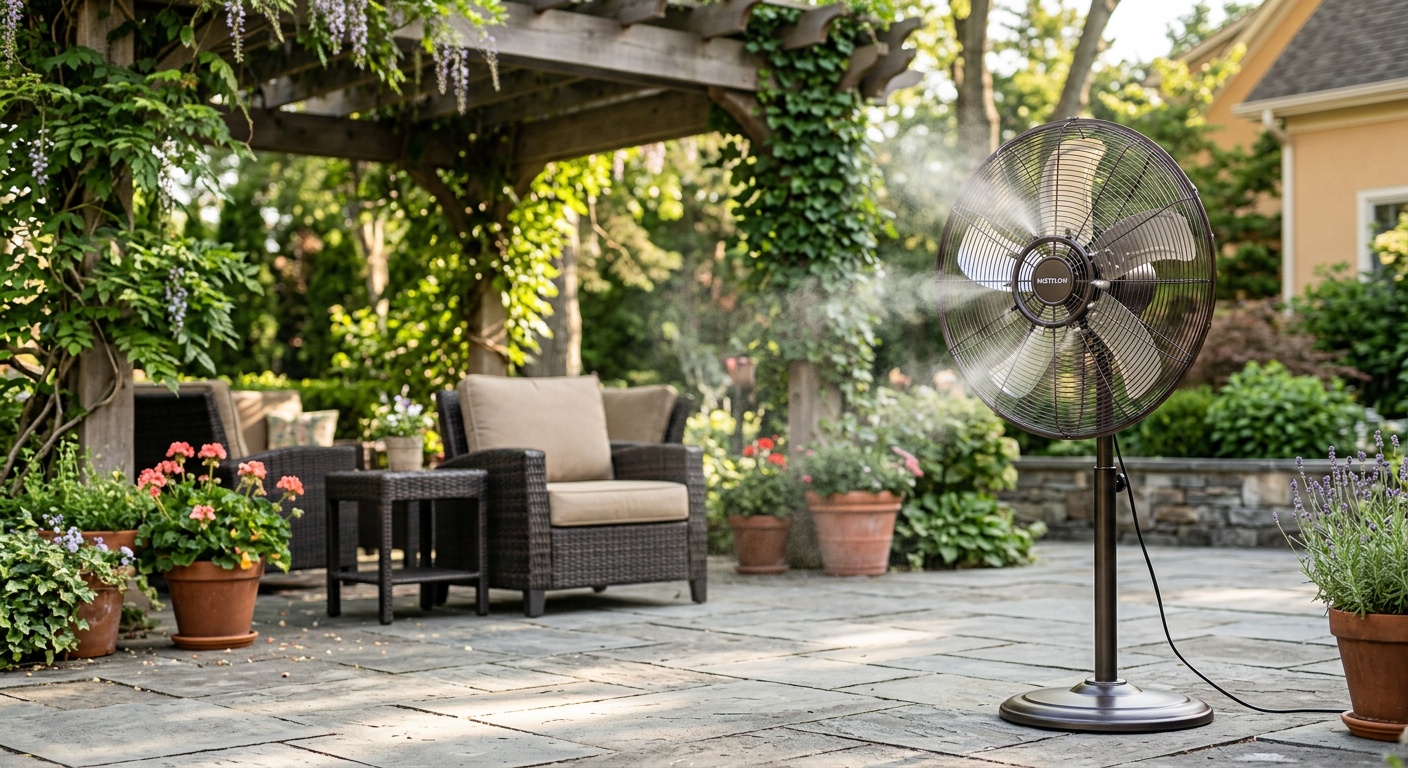
How to Cool Your Patio Without Central Air Conditioning
Reading time: 12 minutes
It’s a sweltering July afternoon in 2026, and your backyard patio — the place you’ve invested in with furniture, string lights, and weekend dreams — feels like the inside of a convection oven. You glance at your energy bill from last month and wince. Running central air conditioning to combat outdoor heat isn’t just ineffective; it’s financially and ecologically absurd. So what’s the smart move?
Here’s the straight talk: you don’t need a central AC system to create a genuinely comfortable outdoor living space. With the right combination of strategies, products, and a little bit of planning, you can slash your patio temperature by 10–20°F — without a single duct or compressor in sight.
According to a 2025 report by the Lawrence Berkeley National Laboratory, outdoor comfort solutions have grown into a $9.4 billion global market, driven largely by record-breaking heatwaves and a cultural shift toward outdoor living. In 2026, with summer temperatures continuing to break regional records across North America, Europe, and Australia, knowing how to cool your patio isn’t a luxury — it’s a practical necessity.
This guide walks you through everything: from the physics of outdoor heat to the best cooling gadgets, smart landscaping, DIY hacks, and the tools professionals actually recommend. Let’s turn that sweltering slab of concrete into your favorite summer retreat.
Table of Contents
- Why Patios Heat Up So Intensely
- Strategic Shade: Your First Line of Defense
- Evaporative Cooling: Harnessing the Power of Water
- Airflow and Fans: Moving the Heat Away
- Surface Materials and Radiant Heat Reduction
- Smart Landscaping for Long-Term Cooling
- Cooling Method Comparison Table
- Effectiveness Visualization
- Frequently Asked Questions
- Your Cool Patio Action Plan
Why Patios Heat Up So Intensely
Before you can fix the problem, you need to understand it. A patio gets dramatically hotter than the surrounding air for several interconnected reasons — and each one points toward a specific solution.
The Radiant Heat Trap
Most patios are built from concrete, stone, brick, or asphalt — all materials with high thermal mass. These surfaces absorb solar radiation throughout the day and re-radiate that heat upward, even hours after the sun has set. A standard concrete patio surface can reach 140–160°F (60–71°C) on a sunny summer day when the ambient air temperature is only 95°F (35°C). That’s why your patio feels like a sauna even in the early evening.
This is compounded by the urban heat island effect, which is increasingly relevant in 2026 as suburban sprawl has reduced green space in many neighborhoods. Hard, impermeable surfaces replace vegetation, eliminating the natural cooling effect of evapotranspiration from plants and soil.
Lack of Natural Air Movement
Many patios are enclosed by walls, fences, or dense shrubbery that was planted for privacy — which inadvertently blocks natural breezes. Without airflow, hot air stagnates around the space and around your body, making the perceived temperature feel even worse. The heat index — which accounts for humidity — can make a 95°F day feel like 105°F or more in a still, sheltered patio environment.
Understanding these two core mechanisms — radiant surface heat and poor airflow — gives you a powerful roadmap. Every effective cooling strategy targets one or both of these issues.
Strategic Shade: Your First Line of Defense
Shade is the single most effective way to cool an outdoor space. It doesn’t just block direct sunlight from hitting your skin; it prevents the surfaces around you from absorbing radiant heat in the first place. Studies from Arizona State University’s Urban Climate Research Center show that shaded surfaces are 20–45°F cooler than unshaded ones during peak sun hours.
Shade Structures Worth Investing In
Pergolas with shade cloth: A pergola covered with a woven shade cloth (rated 70–90% UV blockage) is one of the most popular and versatile solutions in 2026. The open lattice structure still allows airflow while dramatically reducing solar gain. Prices range from $800 for DIY kits to $5,000+ for custom builds.
Retractable awnings: Modern motorized retractable awnings with wind sensors have become significantly more affordable — starting around $600 for quality models. They offer flexibility: full shade when needed, full sun when you want it. Look for awnings with a UPF 50+ rating for maximum UV protection.
Cantilever umbrellas: For smaller patios or dining areas, a large cantilever umbrella (9–13 ft diameter) provides targeted shade without cluttering table space. Premium models include built-in LED lighting and 360-degree rotation.
Sail shades: Triangular or rectangular tension sails are one of the most cost-effective solutions, starting at just $40–$150. Install multiple overlapping sails for fuller coverage. They’re breathable, stylish, and easy to remove in winter.
Quick Shade Tip
Orient your shade structure to block the western sun, which hits hardest in the late afternoon when you’re most likely to be using your patio. A shade that only blocks overhead noon sun misses the worst of the afternoon heat entirely.
Evaporative Cooling: Harnessing the Power of Water
Water is nature’s air conditioner. When liquid water evaporates, it absorbs heat from its surroundings — this is the principle behind sweating, ocean breezes, and one of the most energy-efficient cooling technologies available today: the evaporative cooler.
In low-to-moderate humidity environments (below 60% relative humidity), evaporative cooling can reduce perceived temperatures by 10–20°F with a fraction of the energy consumption of a compressor-based AC unit. Even in more humid climates, misting systems and fan-assisted evaporative devices can meaningfully improve comfort.
Misting Systems: The Outdoor Cooling Workhorse
Misting systems work by forcing water through tiny nozzles (typically 0.012–0.020 inches in diameter) to create a fine fog of droplets that evaporate almost instantly. Unlike cheap misting fans that leave you wet, high-pressure misting systems (operating at 800–1200 PSI) produce droplets so small they cool the air without dampening surfaces or clothing.
A well-installed high-pressure misting system around a 300 sq ft patio perimeter can lower air temperature by 15–25°F in dry climates. Installation costs range from $300 to $1,500 depending on system complexity. Low-pressure systems (30–60 PSI) are cheaper ($30–$150) and work well in drier climates but may leave slight moisture on surfaces in humid areas.
Case Study — Phoenix, AZ (Summer 2025): A homeowner in the Phoenix metro area installed a mid-range misting system ($450) along the perimeter of their 400 sq ft covered patio. On days when ambient temperature reached 112°F, misting system activation brought the patio air temperature down to approximately 92°F — a 20°F reduction — while consuming only about $0.08/hour in water and electricity.
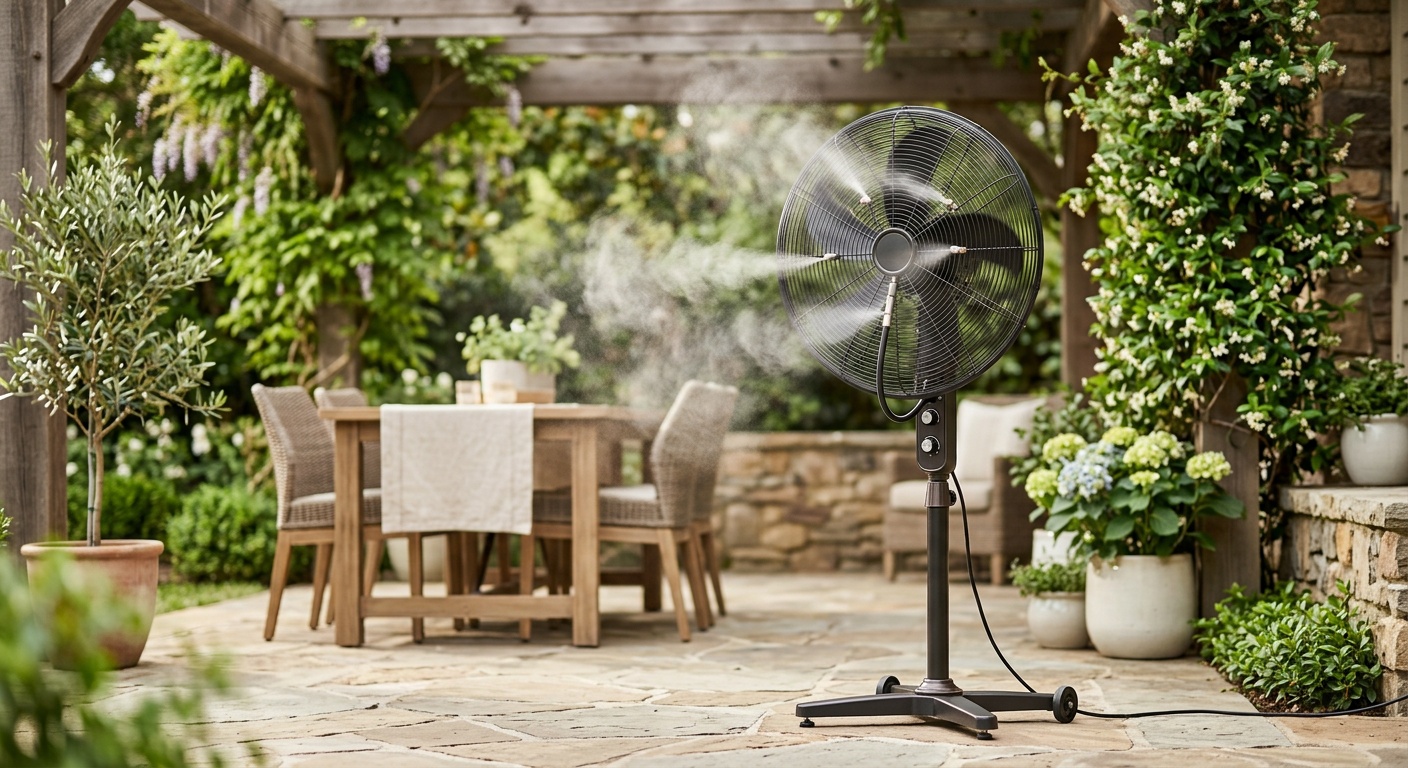
Portable Evaporative Coolers and Misting Fans
For renters, apartment dwellers, or anyone who wants a plug-and-play solution, portable evaporative coolers and misting fans are excellent options. Modern units in 2026 have improved dramatically in efficiency and design. Look for models with:
- Oscillating heads for wider coverage
- Ice compartments for boosted cooling in humid conditions
- Water tank capacity of at least 1.5 gallons for extended use
- Quiet operation ratings below 55 dB
- Energy consumption under 100W for eco-friendly use
Pro Tip: Place a portable misting fan upwind of your seating area. Even a gentle 3–5 mph breeze carrying cooled, misted air dramatically improves perceived comfort compared to blowing cool air directly at a stationary person.
Airflow and Fans: Moving the Heat Away
Shade blocks heat from accumulating. Misting systems lower air temperature. But airflow is what makes your body feel cool — because moving air accelerates the evaporation of sweat from your skin, your body’s own cooling system.
Even a modest air speed of 2 mph can make a 95°F day feel 4–6°F cooler. At 5–6 mph (a gentle breeze equivalent), the perceived cooling effect can be 8–12°F. This is why creating strategic airflow on your patio is one of the highest-ROI investments you can make.
Ceiling Fans for Covered Patios
If your patio has a roof or pergola structure, an outdoor-rated ceiling fan is arguably the single best cooling investment per dollar spent. Look for fans rated “Wet” or “Damp” (not just “indoor”) for outdoor installation. A quality 52-inch outdoor ceiling fan costs $80–$400 and uses only 50–75W — far less than any AC system.
In 2026, smart ceiling fans with app control and humidity sensors have become mainstream. Brands now offer models that automatically adjust speed based on temperature and humidity readings from built-in sensors — a genuinely useful feature for covered patios where conditions change throughout the day.
Pedestal and Tower Fans for Open Patios
For uncovered or semi-covered patios, weatherproof pedestal fans and tower fans provide targeted airflow. Key specifications to prioritize:
- CFM (Cubic Feet per Minute): Look for 2,500+ CFM for open spaces
- IP Rating: IP44 minimum for splash resistance; IP55 for fully outdoor use
- Blade diameter: 18–24 inches for wider coverage
- Noise level: Below 60 dB for comfortable conversation
Positioning strategy: Place fans to create cross-ventilation — intake from the cooler, shaded side of your property and exhaust toward the warmer side. If you have a wall or fence on one side, angle the fan to push air diagonally across the patio rather than directly at people, which creates a more even cooling effect without the “wind tunnel” sensation.
Surface Materials and Radiant Heat Reduction
Addressing the surface beneath your feet might be the most overlooked cooling strategy of all. The wrong patio surface can make all your other cooling efforts feel inadequate because radiant heat from underfoot is continuous and intense.
Reflective or light-colored surfaces reflect solar radiation rather than absorbing it. White or light gray concrete can be up to 50°F cooler than dark asphalt on a sunny day. If you’re planning a new patio or resurfacing an existing one, consider:
- Light-colored concrete or pavers — reflects more solar energy, easier to maintain
- Composite decking in lighter tones — lower thermal mass than concrete
- Natural wood decking — heats up less than concrete and feels cooler underfoot
- Permeable pavers with gravel infill — allows ground moisture to evaporate, cooling the surface
- Outdoor rugs and mats — an immediate, affordable layer between hot surfaces and foot traffic
For existing dark or heat-absorbing surfaces, reflective coatings (also called “cool pavement” coatings) have become more accessible in 2026. These water-based elastomeric coatings can be applied over existing concrete or asphalt and reflect up to 70% of solar radiation. They cost $0.50–$1.50 per square foot to apply and can last 7–10 years with proper preparation.
If you’re looking for inspiration beyond the patio itself, exploring an ac alternative for adjacent indoor spaces like sunrooms or covered porches can complement your outdoor cooling setup beautifully.
Smart Landscaping for Long-Term Cooling
Plants are the original air conditioners. A mature tree shading your patio can reduce surface temperatures by up to 40°F and lower surrounding air temperatures by 3–5°F through evapotranspiration. Strategically placed landscaping creates compounding benefits that improve over years and decades.
Trees: Deciduous trees planted on the south and west sides of your property provide maximum shade during summer (when they’re leafed out) while allowing winter sun to pass through. Species recommendations depend on your climate zone, but fast-growing options like red maples, river birch, and thornless honey locust can provide meaningful shade within 3–5 years.
Green walls and trellises: Vertical gardens — climbing vines on trellises, lattice panels, or modular green wall systems — have seen explosive growth in 2026. They insulate against radiant heat from walls and fences, add evaporative cooling, and provide privacy simultaneously. Jasmine, wisteria, and Virginia creeper are popular choices for their rapid coverage.
Ground cover and mulch: Replacing bare soil or gravel around your patio with grass, ground-cover plants, or thick mulch reduces heat radiating from the surrounding landscape. Bare soil and gravel can reach temperatures as high as pavement; vegetated ground stays significantly cooler.
Case Study — Austin, TX (2025): A landscape architect redesigned a suburban backyard in Austin with a combination of two live oak trees (planted 2021), a jasmine-covered trellis on the western fence, and light-colored decomposed granite replacing black rubber mulch. By summer 2025, the homeowner reported consistently using the patio until 7–8 PM on days that would previously have driven them indoors by 4 PM. Measured patio temperature dropped an average of 14°F compared to two seasons prior.
Cooling Method Comparison Table
Not all cooling solutions are created equal — and the best choice depends on your budget, climate, and patio setup. Here’s a practical breakdown to help you prioritize:
| Cooling Method | Temp Reduction | Avg. Cost (USD) | Best Climate | Maintenance |
|---|---|---|---|---|
| Shade Structures | 15–25°F | $40–$5,000 | All climates | Low |
| Misting Systems | 10–25°F | $30–$1,500 | Dry/arid | Medium |
| Outdoor Ceiling Fans | 4–12°F (perceived) | $80–$400 | All climates | Low |
| Reflective Surface Coatings | 10–30°F (surface) | $150–$600 | Sun-heavy | Low–Medium |
| Strategic Landscaping | 10–20°F (long-term) | $200–$3,000 | All climates | Medium–High |
Effectiveness Visualization: Cooling Methods by Perceived Temperature Reduction
The chart below illustrates the average perceived temperature reduction (in °F) achievable with each major cooling method under optimal conditions:
Average Perceived Cooling Effect (°F Reduction)
Note: Values represent average reductions under optimal conditions. Actual results vary by climate, humidity, and installation quality.
Frequently Asked Questions
Can I cool my patio effectively if I live in a humid climate like Florida or Houston?
Yes, but your strategy needs adjustment. Evaporative cooling (misting systems) becomes less effective above 60–65% relative humidity because the air is already saturated with moisture and can’t absorb additional evaporation efficiently. In humid climates, prioritize shade structures, ceiling fans, and surface cooling over misting. A high-output outdoor ceiling fan combined with dense overhead shade can make even humid 95°F days genuinely comfortable. Some homeowners in high-humidity zones also install outdoor-rated portable air coolers with ice compartments for targeted spot cooling during peak heat periods. Landscaping with dense tree cover is especially valuable in humid climates because transpiring plants naturally lower surrounding temperatures more effectively in those conditions.
What’s the most cost-effective first upgrade for cooling a patio on a tight budget?
If you’re working with under $100, start with a combination of a quality sail shade and a box fan or pedestal fan. A single 16×16 ft sail shade (approximately $60–$90) can eliminate direct solar exposure over your entire seating area, which is the dominant heat source. Pair it with a weatherproof pedestal fan positioned upwind of your seating area, and you’ll notice an immediate and meaningful comfort improvement. For under $150 total, this combination consistently outperforms more expensive single solutions like low-pressure misting systems or decorative patio umbrellas. Once your budget allows, adding a misting attachment to the fan ($20–$40) creates a capable evaporative cooling setup for the price of a restaurant dinner.
How do I cool my patio at night when it’s still radiating heat from the day?
Evening radiant heat is a frustrating but solvable problem. The surfaces around you — concrete, brick, walls — release stored thermal energy for hours after sunset. The most effective nighttime strategies are: (1) Ventilate aggressively with fans to push hot surface-warmed air upward and away; (2) Run a misting system briefly as you begin using the patio — even in humid climates, a short misting burst immediately before use cools the air by 5–8°F; (3) Use outdoor area rugs to insulate your feet from hot surface radiance; and (4) Consider light-colored furniture that doesn’t absorb and re-radiate heat the way dark metal patio furniture can. Installing thermal mass reduction through surface coatings or light-colored paver overlays will gradually reduce the nighttime heat storage problem at its root.
Your Cool Patio Action Plan: From Sweltering to Sanctuary
You now have everything you need to transform your patio from a heat trap into a genuine outdoor living space — without touching a central AC system, without generating monstrous energy bills, and without a contractor camped in your backyard for a month.
Here’s your practical roadmap, ordered by impact and ease of implementation:
- Week 1 — Quick wins: Install a sail shade or patio umbrella over your primary seating area. Add a weatherproof pedestal fan positioned to create cross-ventilation. These two steps alone can drop your perceived temperature by 15–20°F and cost under $200 combined.
- Month 1 — Upgrade airflow: If you have a covered structure, install an outdoor-rated ceiling fan. Replace any dark outdoor rugs or mats with light-colored alternatives. Consider a basic low-pressure misting system if your climate is relatively dry.
- Month 2–3 — Surface strategy: Apply a reflective coating to dark concrete or pavers if applicable. Swap or cover any dark metal furniture that’s creating radiant hot spots. Evaluate your existing fencing or walls for green wall or trellis potential.
- Season 2 — Long-term landscaping: Plant 1–2 deciduous trees on your west or south property line. Begin training a climbing vine on a western trellis. Each growing season will compound your cooling naturally and beautifully.
- Ongoing optimization: Monitor comfort levels at different times of day. The best patio cooling setups are layered — shade + airflow + surface treatment + vegetation — and each element reinforces the others.
As global temperatures continue trending upward into the late 2020s, the ability to create comfortable, energy-efficient outdoor living spaces is becoming both a personal wellness skill and a genuine contributor to broader climate adaptation. Every homeowner who invests in smart outdoor cooling reduces peak electricity demand — which is exactly when grids are most strained — and demonstrates that comfortable living and sustainability aren’t mutually exclusive.
So here’s the question worth sitting with: Which single upgrade, if you implemented it this weekend, would make the most immediate difference to how you use your outdoor space this summer? Start there. Build from that win. Your patio sanctuary is closer than you think.
Article reviewed by Sofia Romano, Flooring & Wall Tiling Geometry Specialist, on July 15, 2026