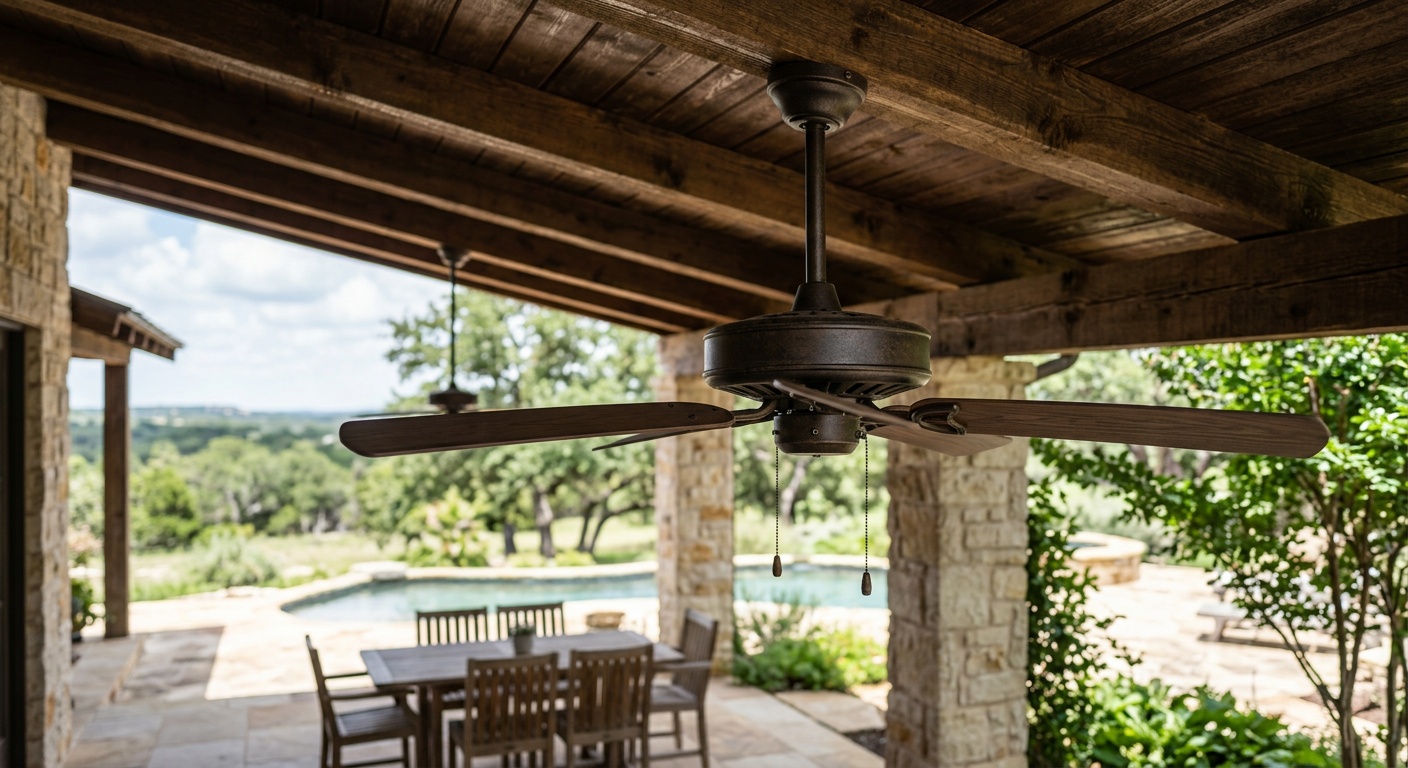
Outdoor Ceiling Fans vs Personal Coolers for Patio Comfort: The Ultimate 2026 Guide
Reading time: 12 minutes
Picture this: It’s a sweltering July afternoon, your patio thermometer reads 97°F, and your outdoor gathering is slowly turning into a sweaty, uncomfortable ordeal. You’ve got guests fanning themselves with paper plates, and someone’s already retreated inside to the air conditioning. Sound familiar?
Here’s the straight talk: choosing between an outdoor ceiling fan and a personal cooler for your patio isn’t just a product decision — it’s a lifestyle decision. The right choice depends on your space, your climate, your budget, and honestly, how you like to entertain. And in 2026, with smarter technology, rising energy costs, and increasingly unpredictable summers, that decision matters more than ever.
This guide cuts through the marketing noise to give you a precise, practical breakdown of both options so you can stop sweating the small stuff — and just stop sweating altogether.
Table of Contents
- Why Your Cooling Choice Matters More Than Ever in 2026
- Outdoor Ceiling Fans: The Classic Overhead Solution
- Personal Coolers: Targeted, Portable, and Powerful
- Head-to-Head Comparison Table
- Cooling Performance at a Glance
- Real-World Scenarios: Which Wins?
- 3 Common Challenges and How to Overcome Them
- Frequently Asked Questions
- Your Perfect Patio Cooling Roadmap
Why Your Cooling Choice Matters More Than Ever in 2026
The outdoor living market has exploded. According to the American Home Improvement Research Institute’s 2025 Annual Report, patio and outdoor living space upgrades represented a $52 billion industry in the United States alone — up 18% from 2023. People are investing more in outdoor spaces than at any point in the past two decades.
At the same time, the National Oceanic and Atmospheric Administration (NOAA) confirmed that 2025 ranked as the third hottest year on record globally, continuing a trend that has made outdoor cooling not just a comfort luxury but a genuine health consideration. Heat-related illness hospitalizations increased by 14% in the U.S. between 2023 and 2025, particularly affecting outdoor gatherings and events.
Energy costs also play a role. The average U.S. residential electricity rate hit 16.8 cents per kWh in early 2026, making energy efficiency a practical concern alongside comfort. Choosing the wrong cooling solution could mean overpaying on your utility bill, buying equipment that doesn’t actually cool effectively, or installing something that deteriorates quickly in outdoor conditions.
So let’s dig into each option with the detail they deserve.
Outdoor Ceiling Fans: The Classic Overhead Solution
How Outdoor Ceiling Fans Actually Work
Here’s something most people misunderstand: ceiling fans don’t actually lower the air temperature. What they do is create a wind chill effect — moving air across your skin accelerates the evaporation of moisture (perspiration), which makes you feel cooler by 4 to 8 degrees Fahrenheit. This is a critical distinction, especially if you’re dealing with extreme heat or high humidity.
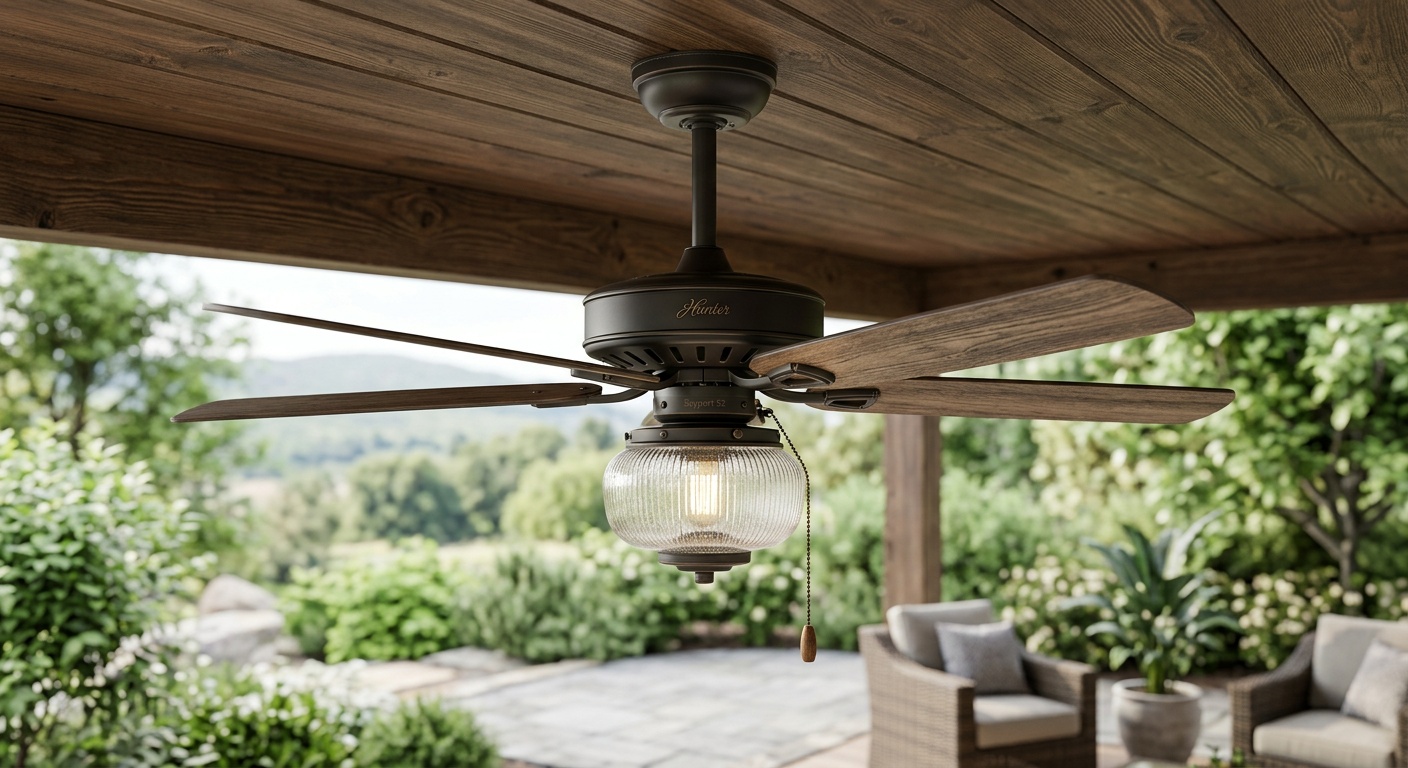
Outdoor ceiling fans are specifically rated for wet or damp locations. UL-listed wet-rated fans are designed to withstand direct rain exposure, while damp-rated fans work in covered patios or pergolas where they won’t get directly rained on. Using an indoor fan outdoors is a safety and durability mistake many homeowners make — one that voids warranties and can create electrical hazards.
In 2026, the leading outdoor ceiling fan brands — including Hunter Fan Company, Minka-Aire, Big Ass Fans, and Emerson — have pushed the technology envelope considerably. Wi-Fi and Bluetooth integration, DC motor efficiency, and weather-resistant composite blade materials are now standard at mid-range price points.
Key Advantages of Outdoor Ceiling Fans
- Coverage area: A single 52-inch fan can comfortably cover a 225–400 sq ft patio area
- Energy efficiency: DC motor fans consume as little as 15–35 watts — cheaper to run than a standard light bulb
- Aesthetic integration: Fans blend into outdoor architecture and don’t create clutter
- Year-round use: Reverse function circulates warm air in winter, extending the usefulness of outdoor spaces
- Hands-free operation: Once installed, they require minimal interaction — great for large gatherings
- Smart home compatibility: 2025–2026 models commonly integrate with Google Home, Amazon Alexa, and Apple HomeKit
Limitations Worth Knowing
- Requires professional electrical installation (adds $150–$400 to cost)
- Only effective in covered outdoor spaces — open pergolas with no roof cannot support them safely
- Less effective in very high humidity environments (above 85% RH) where wind chill matters less
- Doesn’t work for patios without ceiling structures (ground-level decks, open yards)
- Ineffective at reducing actual ambient temperature — only perceived temperature
Pro Tip: If your patio ceiling height is below 8 feet, choose a flush-mount (hugger) fan. For ceilings above 10 feet, a downrod extension of at least 12 inches ensures the fan operates in the optimal 7–9 foot zone above the floor for maximum airflow effectiveness.
Personal Coolers: Targeted, Portable, and Powerful
Breaking Down the Personal Cooler Category
The term “personal cooler” covers a surprisingly wide range of products. Understanding the subcategories is essential to making the right choice:
- Evaporative coolers (swamp coolers): Use water evaporation to genuinely lower air temperature. Most effective in dry climates with under 60% humidity. Models like the Hessaire MC37M and Portacool Jetstream 230 can drop ambient temperature by 10–20°F in ideal conditions.
- Misting fans: Combine fan airflow with fine water mist. Great for open outdoor spaces. The mist evaporates quickly, cooling the area around users. Popular in restaurants and stadiums.
- Personal bladeless air circulators: Compact, bladeless units (think modern Dyson-style) that deliver concentrated airflow to a small personal zone.
- Portable air conditioners (limited outdoor use): Battery-powered or plug-in ACs designed for semi-enclosed outdoor spaces — more niche but growing in 2026.
Why Personal Coolers Are Gaining Ground
According to a 2025 Consumer Electronics Association report, sales of portable personal cooling devices grew by 31% year-over-year between 2024 and 2025. The driving factors are flexibility, renters who can’t install permanent fixtures, and the rise of outdoor workspaces. The post-pandemic outdoor lifestyle trend has firmly cemented itself into how Americans use their homes.
Personal coolers shine in several scenarios:
- Open patios, decks, and yards without overhead structure for fan mounting
- Renters or apartment dwellers who cannot install permanent fixtures
- People who need targeted cooling for one or two individuals rather than an entire area
- Hot, dry climates (Phoenix, Las Vegas, Albuquerque) where evaporative cooling is genuinely effective
- Situations requiring portability — camping, tailgating, pop-up outdoor events
Limitations of Personal Coolers
- Evaporative coolers are largely ineffective in humid climates (Southeast U.S., coastal areas) — the air is already too saturated for evaporation to work well
- Water reservoir refills every 4–8 hours, adding maintenance burden
- Misting fans can leave surfaces and furniture damp
- Noise levels are often higher than ceiling fans (50–65 dB for larger units)
- Larger portable coolers consume 200–600 watts — significantly more energy than ceiling fans
- Coverage area is typically limited to 50–150 sq ft even for mid-size units
Pro Tip: For a humid climate like Houston or Miami, skip the evaporative cooler entirely. Your money is better spent on a high-velocity misting fan or a combination approach with a ceiling fan to maximize wind chill effect. In dry Phoenix summers, an evaporative cooler like the Portacool Cyclone 3000 can be genuinely transformative.
Head-to-Head Comparison Table
| Metric | Outdoor Ceiling Fan | Personal Cooler / Evaporative |
|---|---|---|
| Average Cost (2026) | $120 – $650 + $200–$400 install | $80 – $700 (plug-and-play) |
| Energy Consumption | 15 – 75 watts | 150 – 600 watts |
| Effective Coverage Area | 200 – 400 sq ft (per fan) | 50 – 250 sq ft |
| Climate Suitability | All climates (covered spaces) | Best in dry climates (<60% RH) |
| Portability | None (permanent) | High (wheeled or handheld) |
Cooling Performance at a Glance
The chart below compares key performance and value scores (out of 100) for both cooling solutions across critical factors based on aggregated 2025–2026 consumer and expert ratings.
Energy Efficiency
Portability & Flexibility
Coverage Area Score
Climate Versatility
Scores compiled from 2025–2026 consumer reviews, energy audit data, and expert evaluations. Scale: 0–100.
Real-World Scenarios: Which Wins?
Scenario 1: The Houston Homeowner with a Covered Lanai
Meet Marcus, a homeowner in Houston, Texas. His 300 sq ft covered lanai is his primary summer entertaining space. Houston’s average summer humidity sits around 74–80% relative humidity — solidly in the range where evaporative coolers fail miserably. He tried a $280 swamp cooler in summer 2024 and returned it within a week.
In early 2026, Marcus installed two Hunter Kensington 52-inch outdoor ceiling fans ($219 each, DC motor, damp-rated) on a dedicated circuit. Total cost with electrician: approximately $950. Running both fans at medium speed for 6 hours daily costs him roughly $0.08 per day at Texas electricity rates. His guests now consistently remark that the lanai feels 5–7 degrees cooler and significantly less oppressive. The wind chill effect, combined with good ceiling fan placement, transformed his outdoor hosting. Verdict: Ceiling fan wins decisively in humid climates.
Scenario 2: The Phoenix Apartment Renter with an Open Balcony
Now meet Priya, who rents a third-floor apartment in Scottsdale, Arizona. She has a 120 sq ft open balcony with no overhead structure to mount a ceiling fan — and as a renter, permanent installation isn’t an option anyway. Phoenix averages 38% relative humidity in summer, making it essentially perfect for evaporative cooling.
Priya purchased a Portacool Jetstream 230 portable evaporative cooler ($429) in spring 2025. On a 108°F day with dry desert heat, the unit dropped her balcony’s ambient temperature by a measured 14°F within 20 minutes. She fills the 10-gallon tank every 6–8 hours. The unit moves on wheels, stores in a closet off-season, and requires zero installation. Her only complaint: the noise level at high speed (~62 dB). Verdict: Personal evaporative cooler wins for open, dry-climate spaces with flexibility needs.
Scenario 3: The Mid-Atlantic Deck Entertainer — A Hybrid Approach
In Northern Virginia, the Kim family has a 450 sq ft covered deck used for everything from weeknight dinners to large summer parties. Their climate blends: hot summers (85–95°F) with moderate humidity (55–70%). A single cooling solution felt like a compromise either way.
Their solution in 2026: Two 52-inch outdoor ceiling fans (permanently installed) plus one portable misting fan positioned near the seating area for particularly hot afternoons. The ceiling fans handle general airflow and comfort during evenings; the misting fan adds targeted cooling during peak afternoon heat. Total system cost: ~$1,400. The hybrid approach outperforms either solution alone, and they describe their deck as “genuinely comfortable” even at 92°F. Verdict: Combination approach wins for mixed climates and larger entertaining spaces.
3 Common Challenges and How to Overcome Them
Challenge 1: “My fan doesn’t seem to make a real difference”
This is the number-one complaint about outdoor ceiling fans, and it almost always comes down to improper sizing or placement. A 42-inch fan installed on a 400 sq ft patio is simply undersized. Similarly, a fan installed with too short a downrod — sitting flush with a 12-foot ceiling — pushes airflow into empty space above head level.
Solution: Match fan blade span to space size. For patios up to 225 sq ft, a 44–48 inch fan works well. For 225–400 sq ft, go 52–56 inches. For larger spaces, use multiple fans. Ensure the fan operates 7–9 feet above the floor. Bump speed settings up — many people run fans on medium when high is what’s needed outdoors where airflow dissipates faster than indoors.
Challenge 2: “My evaporative cooler isn’t cooling effectively”
Evaporative coolers are humidity-sensitive — if your local relative humidity is above 60–65%, you’ll get minimal cooling effect. The water evaporation process is inhibited by already-saturated air.
Solution: Check your area’s average summer humidity before buying an evaporative cooler. Use resources like Weather.com’s humidity averages by city. If you’re in a humid region, pivot to a high-velocity misting fan (which works on shorter range but with very fine droplets that evaporate faster) or simply invest in a ceiling fan system. Don’t try to fight physics with the wrong tool.
Challenge 3: “My outdoor fan is deteriorating quickly”
Many buyers don’t realize that outdoor ceiling fans have specific wet vs. damp ratings, and placing the wrong type in the wrong environment causes rapid motor failure, blade warping, and rust — often within 1–2 seasons.
Solution: For completely exposed areas (no roof coverage), purchase only UL wet-rated fans. For covered patios where rain won’t directly hit the fan, damp-rated fans are fine and offer more style options. Read the product’s UL listing carefully — “outdoor” on the packaging doesn’t automatically mean wet-rated. Hunter, Minka-Aire, and Emerson clearly label their wet/damp ratings on product listings.
Frequently Asked Questions
Can I use both an outdoor ceiling fan and a personal cooler together?
Absolutely — and in many climates, this is actually the most effective approach. Ceiling fans create consistent background airflow and wind chill across your whole patio, while a portable evaporative or misting cooler provides targeted, more intense cooling to a specific seating zone. The combination works especially well in moderate-humidity climates (50–65% RH) where neither solution alone delivers ideal comfort. Think of ceiling fans as your foundation layer and personal coolers as your precision tool.
Which option is better if I’m renting my home or apartment?
Personal coolers win for renters without question. Ceiling fans require electrical installation that most landlords won’t approve or that could void your lease. Modern portable evaporative coolers, misting fans, and personal air circulators require only a standard outlet and can move with you when you leave. If your landlord does permit minor electrical work, some renters install ceiling fans and restore the original fixture upon move-out — but always get written permission first to avoid deposit disputes.
What’s the most energy-efficient choice for daily outdoor cooling in 2026?
Outdoor ceiling fans with DC motors are dramatically more energy-efficient than virtually any personal cooler. DC motor fans like the Big Ass Fans Haiku Outdoor or Hunter Crestfield consume as little as 14–30 watts on medium speed — roughly one-tenth the energy consumption of even a small evaporative cooler. At the current U.S. average rate of 16.8 cents per kWh in 2026, running a DC ceiling fan for 8 hours costs approximately 2–4 cents. For daily, multi-hour outdoor cooling, ceiling fans offer a significantly lower long-term operating cost despite higher upfront installation expense.
Your Perfect Patio Cooling Roadmap
As outdoor living continues to evolve into a genuine extension of home life — and as summers grow hotter and longer — your patio cooling strategy isn’t just about comfort. It’s about maximizing the livability of your home and the quality of time spent outdoors. Here’s how to move forward with confidence:
- Step 1 — Assess your space: Does your patio have a covered ceiling structure? If yes, ceiling fans are a viable and likely superior long-term investment. If no, personal coolers are your primary option.
- Step 2 — Know your climate: Check your local average summer humidity. Above 65%? Lean toward ceiling fans and misting solutions. Below 60%? Evaporative coolers may genuinely transform your outdoor space.
- Step 3 — Set a realistic budget: Include installation costs for ceiling fans (factor in $200–$400 for professional electrical work). Compare that to the long-term energy savings over 5–7 years versus a portable cooler.
- Step 4 — Consider a hybrid approach: If your budget allows, installing one or two ceiling fans while keeping a portable misting fan for extreme heat days gives you the best of both worlds — precisely what the Kim family scenario demonstrated.
- Step 5 — Prioritize smart integration: In 2026, choosing fans or coolers compatible with your existing smart home ecosystem adds meaningful convenience. Schedule cooling to start 30 minutes before you head outside — your patio will be ready when you are.
The outdoor cooling market will only grow more sophisticated through 2027 and beyond, with AI-driven climate control systems and solar-powered portable coolers already entering the market. Getting your patio comfort strategy right now positions you to build on a smart foundation rather than starting over.
So here’s the question worth sitting with: What would you do with your outdoor space if you knew it would be genuinely comfortable, all summer long? The right cooling solution doesn’t just beat the heat — it unlocks a whole new dimension of your home’s potential. Start with one clear, well-informed step today, and your patio will thank you all season.
Article reviewed by Sofia Romano, Flooring & Wall Tiling Geometry Specialist, on July 15, 2026